



Description
What 100 Grams of Kopi Luwak Coffee Beans Buys You
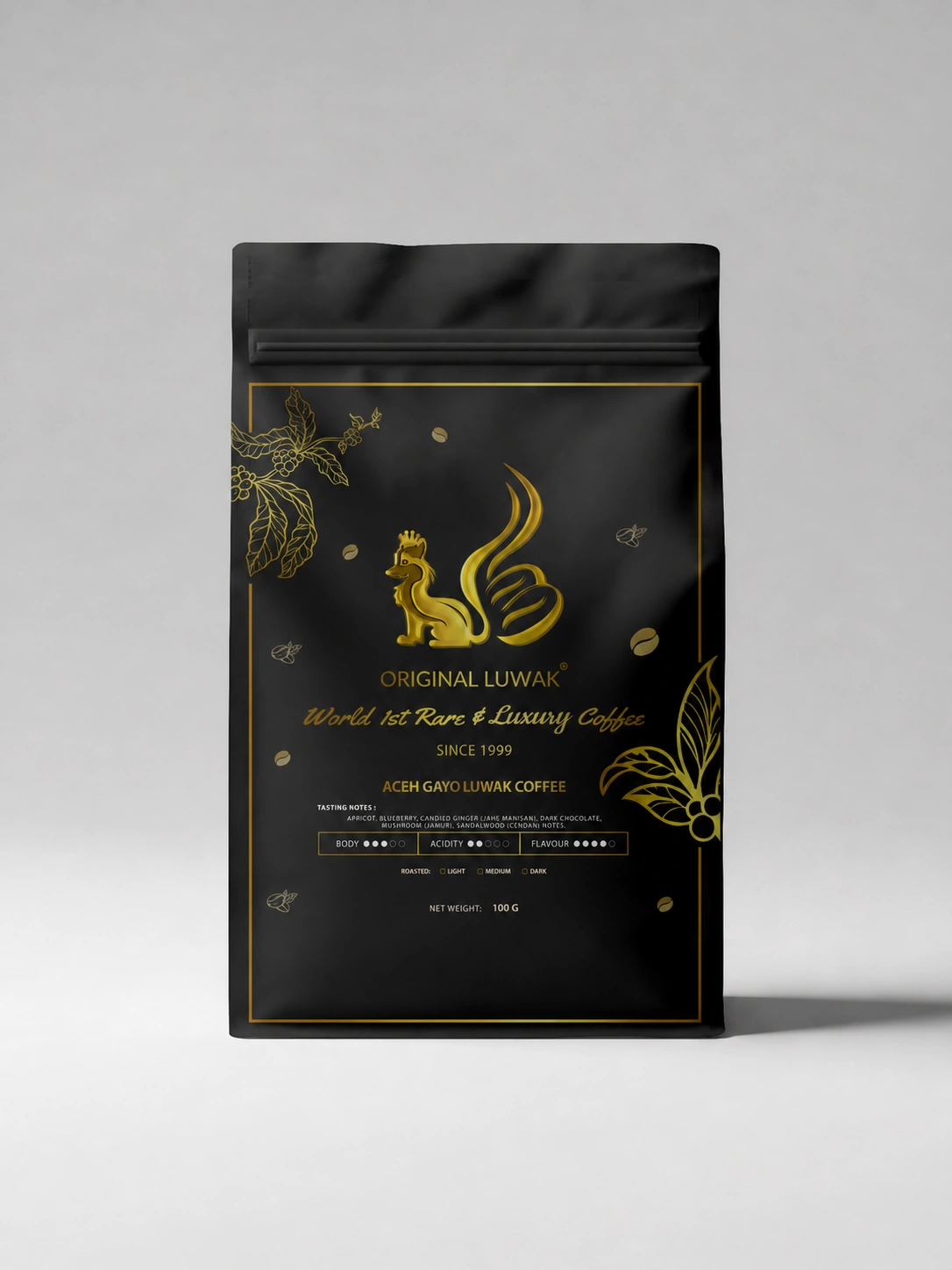
A hundred grams is about seven cups at a proper 15-gram dose. Seven.
We could sell you a kilo. We do sell kilos. But a kilo of kopi luwak coffee beans sitting in a cupboard slowly loses the thing you paid for, and most people who buy one end up drinking the last third out of obligation rather than pleasure.
A hundred grams is a different proposition. It is enough to learn the coffee, to get the grind wrong once, adjust, and then hit it four or five times in a row. It is enough to serve it to three people who will remember it. It is not enough to become casual about.
Wild civets in Aceh Tengah select their own cherries from trees growing between 1,200 and 1,700 metres. Nobody schedules that. Nobody scales it. The yield is what the forest gives in a season, which is why this arrives in a pouch and not a sack.
Kopi Luwak Is a Process, Not a Variety
This is the part most sellers skip. Kopi luwak is not a coffee species. It is a processing method, and the processor happens to be an animal.
The civet eats ripe cherries and its digestive enzymes act on the seed inside, breaking down some of the proteins that turn bitter in the roaster. What comes out is Arabica that has been fermented in a way no wet mill can reproduce. We explain the chemistry in why kopi luwak is less bitter.
That is also why two bags of kopi luwak coffee beans can taste nothing alike. Variety, altitude, harvest area, and roast level all still apply, exactly as they would with any other coffee.
The Cup: What These Civet Coffee Beans Taste Like
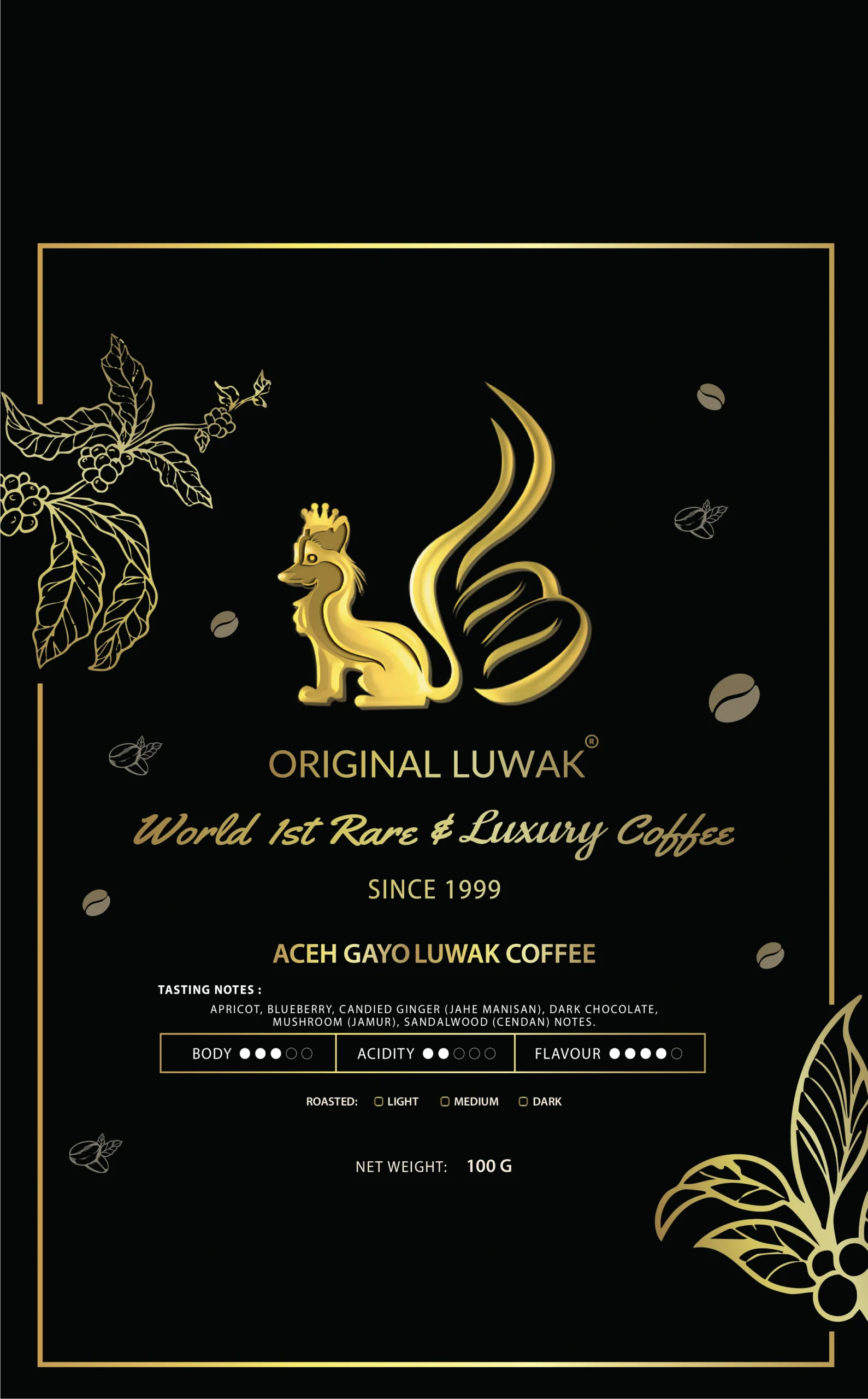
Kopi luwak is famous for being smooth and low in bitterness. This lot leans nutty and herbal rather than heavy and earthy, which is where most Sumatran coffee lands.
- Aroma opens fresh and nutty: vanilla, chocolate, and a gentle almond note underneath.
- The cup itself runs herbal and refreshing, with a gentle spice through the middle.
- Acidity is soft to medium, never sharp.
- Body is soft and mild, and the finish is clean rather than heavy. Balanced across body, acidity, and sweetness, with fine chocolate and almond holding it together.
Acidity is present and clean rather than sharp, and the reason is in the milling. Most Sumatran coffee is wet-hulled, known locally as giling basah, where the parchment is stripped while the bean still holds a lot of moisture. That is what gives Sumatra its heavy, earthy, sometimes muddy character. These beans are semi-washed and dry-hulled instead: the parchment comes off only after the bean has dried to a stable moisture, by hand. It takes longer and costs yield, but it leaves the fruit in the cup instead of burying it. If you have tried kopi luwak before and found it flat or muddy, this is the different variable.
One honest caveat: notes shift between batches. Each batch is collected from a different part of the forest, and civets eat other fruit alongside coffee cherries, which leaves a trace in the cup. Roast level moves it further. We cup every batch at 84+ before packing, but we will not promise you an identical cup twice. Our cupping protocol explains how we score it.
Coffee Details
- Origin: Aceh Tengah (Gayo), Sumatra, Indonesia
- Altitude: 1,200 to 1,700 m above sea level
- Bean: 100% Arabica, single-origin
- Processing: Semi-washed, manual dry-hulled (not wet-hulled)
- Grade: Specialty graded, cupped 84+ by a CQI-certified Q Grader
- Screen size: 15 to 19
- Moisture: Under 13%
- Defect triage: 3 to 6%
- Roast: Light, medium, or dark, roasted to order
- Grind: Whole bean or ground to your brewer
- Size: 100 g, roughly seven cups at a 15 g dose
- Certification: MPKG certified, Halal certified
Where These Kopi Luwak Coffee Beans Come From
Not “Indonesia”. Aceh Tengah, on Sumatra, specifically the harvest areas around Takengon, Bener Meriah, Angkup, Sukarame, Bies and Pondok Baru. This is Gayo country, and it is where wild kopi luwak has been collected the longest.
Volcanic soil, sitting just north of the equator, 1,200 to 1,700 metres up. Cherries take nine months from flower to ripe. They are hand-picked, and the beans that go into this pouch were selected first by civets that live free in that forest, not caged, not force-fed a coffee-only diet.
That distinction matters for the cup, not just for ethics. A civet on a natural diet of fruit, insects, and cherries has a working digestive enzyme system. A caged civet fed nothing but coffee does not, and the beans show it. Every step from forest floor to roaster is set out in the luwak coffee process, and the paperwork behind our sourcing sits on our certifications page.
How to Tell Real Kopi Luwak Beans From Fake
Kopi luwak is the most counterfeited coffee in the world, and ordinary Gayo Arabica is routinely sold as the real thing. Three checks before you buy from anyone:
- Look at the bean. Authentic kopi luwak keeps its kulit ari, the thin silver skin, intact, and the colour sits slightly off the bright green of regular washed beans.
- Ask for the grading. A real lot has a cupping score and a grader behind it. Ours is 84+, verified by a CQI-certified Q Grader.
- Check the price floor. Verified wild coffee does not exist below roughly $600 per kilogram. Below that, you are buying caged production, a blend, or neither.
There are more checks in our buyer’s guide to spotting real kopi luwak.
Is Kopi Luwak Safe to Drink?
Yes. The beans are washed thoroughly after collection, dried, hulled, and then roasted at temperatures above 200°C, well past what any surviving bacteria tolerates. The pouch you receive is MPKG certified and Halal certified. We go through the evidence in full in is kopi luwak safe to drink.
How to Brew These Beans
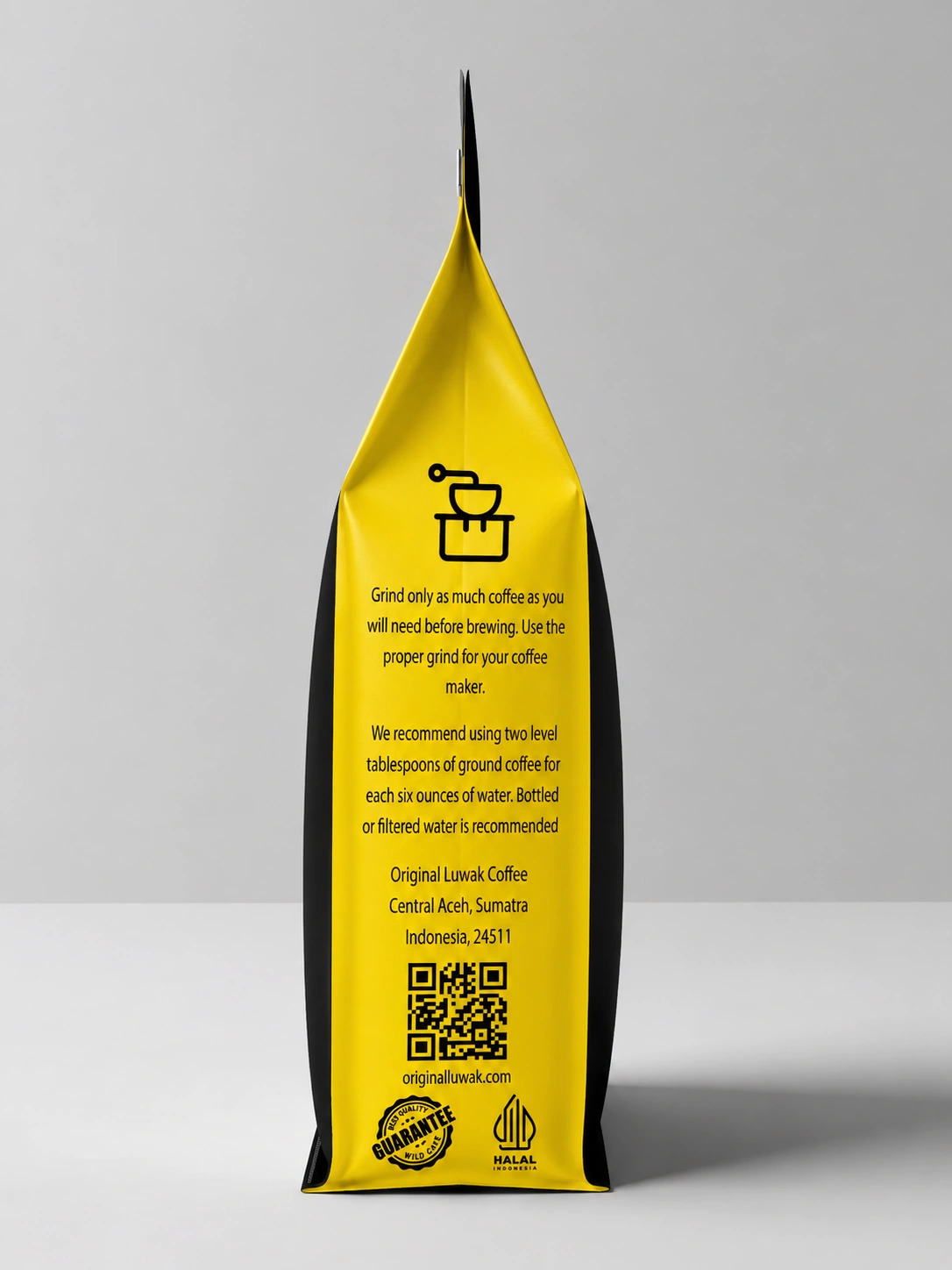
Start with 15 g to about 240 ml of water, a 1:16 ratio, water just off the boil. Pour-over and French press show the herbal, refreshing side; espresso pushes the chocolate and almond forward. For grind sizes and a recipe for each brewer, see how to brew kopi luwak.
Keep the pouch sealed, away from heat and light. Kopi luwak does not spoil quickly, but it does flatten, which is the reason we sell it 100 grams at a time.
Who Buys the 100 g
- The first-timer. You have read about this coffee for years and are not ready to commit to a kilogram of something you might not like.
- The gift-giver. It survives the test most gifts fail: the recipient remembers who gave it, because they tell the story every time they serve it.
- The host. One pouch is three or four occasions where the coffee itself is the event.
- The comparer. You already drink Gesha and Blue Mountain and want to know honestly where this sits.
- Hotels, villas and private clubs running a small tasting programme rather than a full menu listing. For anything above single pouches, contact us for volume pricing.