


Kopi luwak is safe to drink when it is handled like any other specialty coffee. The question keeps coming up because the beans begin as seeds recovered from Asian palm civet droppings. It also carries a commercial edge, since the premium that makes this coffee a gift is exactly what attracts fraud. This guide covers the microbiology, the sourcing signals, and the checks that separate a verified batch from a doubtful one.
Is kopi luwak safe to drink? Yes, for healthy adults, because roasting green coffee at 180°C to 230°C destroys foodborne pathogens, and authentic batches are washed, sun dried to 10 to 12 percent moisture, and hand sorted before they reach the roaster. The remaining risk is commercial rather than microbial. Much of the market is mislabeled, and caged production is routinely sold as wild.
Is Kopi Luwak Safe to Drink for a Healthy Adult?
Yes. Once processing is complete, roasted kopi luwak carries the same food safety profile as any other roasted specialty Arabica. The most cited work on digested coffees remains Massimo Marcone’s 2004 study in Food Research International, which reported negligible enteric organisms on commercially prepared kopi luwak beans. A 2025 study published in PMC on the microbial community of Indonesian civet excreta found non-pathogenic bacteria at 50.76 percent to 90.51 percent relative abundance, with pathogens at 9.49 percent to 41.24 percent. Those pathogen figures describe raw droppings at the point of collection, not the finished product. The gap between those two states is the entire answer.
Caffeine is the more practical limit. Healthline’s medically reviewed overview of the benefits and side effects of drinking coffee, updated in August 2025, puts a single cup at roughly 95 mg of caffeine and lists jitteriness, anxiety, heart palpitations, and disrupted sleep as consequences of excess intake.
For pregnant readers, people managing blood pressure, and anyone sensitive to stimulants, is kopi luwak safe to drink becomes a caffeine question rather than a hygiene question. Clinical advice on caffeine limits should come from a physician, not from a coffee seller.
What Happens Inside the Civet That Changes the Bean?
The civet digests the cherry pulp and leaves the seed chemically altered. Asian palm civets (Paradoxurus hermaphroditus) select ripe cherries by smell, and the seeds pass through a gut colonized by lactic acid bacteria, the same organisms preferred in wet processing systems.
Marcone’s work described this as a natural wet fermentation. Digestive enzymes break down proteins in the bean, and proteins are what generate bitterness during roasting. Less protein going in means less bitterness coming out. This is the step that makes people ask is kopi luwak safe to drink, and it is also the step that produces the cup profile buyers pay for.
Readers who want the full mechanism can read what civet coffee is and how kopi luwak is defined, which covers the species, the terminology, and the origin history in more depth than a safety article can.
How Processing Answers Is Kopi Luwak Safe to Drink
Five sequential steps convert biological material into a shelf-stable food product. Each one reduces microbial load, and the last one eliminates it.
- Collection. Droppings are gathered from the forest floor, ideally logged by location and date. In Aceh Tengah, collection follows the civets rather than confining them.
- Washing. Seeds are separated from residue and washed repeatedly. Visible organic matter leaves at this stage.
- Sun drying. Parchment beans dry on raised beds to 10 to 12 percent moisture. Ultraviolet exposure and moisture reduction both suppress microbial survival.
- Hulling and hand sorting. Parchment is removed and defective beans are picked out by hand. Discoloration and physical damage are removed as quality defects and as spoilage markers.
- Roasting. Commercial roasting runs between 180°C and 230°C. Standard food safety guidance places the thermal death point of common foodborne bacteria far below that range, which is why roasting is treated as the decisive step rather than one control among several.
The full luwak coffee process from cherry to roasted bean documents each stage with the handling detail that a summary compresses.
At Original Luwak, one further step sits after roasting. Every batch is cupped and verified by a CQI-certified Q Grader before release, and every batch is Halal certified. That check is not a food safety test in the laboratory sense. It is a profile and defect check, and it is the point where an off batch gets stopped instead of shipped.
Wild Free-Roaming Sourcing Against Caged Production
Caged sourcing does not make roasted coffee unsafe, and asking is kopi luwak safe to drink will not surface the problem, because the defect sits in the label rather than in the cup.
PETA’s investigations into cruelty in the kopi luwak industry document confinement, coffee-only diets, and untreated illness on farms across Indonesia, alongside producers who admitted to relabeling caged output as wild. A PETA UK press release from 2022 quoted a worker describing the volume difference directly: no more than 20 kg of droppings a year collected from the jungle, against up to 400 kg a year from caged animals.
That ratio explains the fraud. Wild supply is small by definition.
| Factor | Wild free-roaming civet | Caged civet |
|---|---|---|
| Cherry selection | Animal selects ripe cherries by preference | Cherries supplied in bulk regardless of ripeness |
| Reported annual volume per source | No more than 20 kg of droppings collected from forest (PETA UK, 2022) | Up to 400 kg per year (PETA UK, 2022) |
| Animal welfare | No cages, no restricted diet | Confinement, restricted diet, documented illness |
| Labeling risk | Volume constraint is visible in the offer | Frequently relabeled as wild-sourced |
| Scarcity | Structural | Claimed |
Original Luwak sources only from wild free-roaming Asian palm civets in the Aceh Tengah highlands, with the Indonesia office in Desa Pondok Balik, Kecamatan Ketol. Batches are small because the collection method sets the ceiling, and batches run out.
How Does Kopi Luwak Compare With Regular Arabica on Caffeine and Acidity?
Kopi luwak measures lower in caffeine, lower in protein, and more acidic than regular Arabica in the most direct published comparison, though the literature is not unanimous.
| Measured attribute (roasted bean) | Kopi luwak | Regular Arabica | Source |
|---|---|---|---|
| Caffeine | 0.47% | 0.61% | Ifmalinda et al., JAAST, 2019 |
| Protein | 10.12% | 11.30% | Ifmalinda et al., JAAST, 2019 |
| pH | 5.7 | 6.9 | Ifmalinda et al., JAAST, 2019 |
| Cup character | Nutty, vanilla, chocolate, almond, gentle herbal spice, minimal bitterness | Varies by origin and roast | Original Luwak small batch roast profile |
Honest caveat: a 2023 metabolite analysis of coffee brews reported higher caffeine and theophylline in kopi luwak than in the washed and unwashed Arabica samples it tested, while a separate 2023 chemometric study reported lower alkaloids. Bean species, altitude, and roast level all move these numbers. Readers who arrive at is kopi luwak safe to drink expecting a low-caffeine alternative should treat any single percentage as one measurement rather than a specification.
How to Brew and Store Kopi Luwak Without Wasting It
Brewing has no bearing on is kopi luwak safe to drink, but it decides whether the cup justifies the price.
- Grind at the moment of brewing. Pre-ground coffee loses aromatics within days, and aromatics are what the premium buys.
- Brew between 92°C and 96°C, the Specialty Coffee Association range. Water above that scorches and reintroduces bitterness that the fermentation removed.
- Use a 1:16 ratio of coffee to water as a starting point, then adjust. Filter brewing brings out the herbal, refreshing side; espresso pushes the chocolate and almond forward.
- Store sealed, dark, and away from heat. A resealed standing pouch is adequate. Refrigeration introduces moisture and is not recommended.
Brewing notes, origin write-ups, and cupping guides sit together in The Luwak Journal for readers who want the longer method pieces.
Four Mistakes That Undermine a Batch
Most complaints that begin as is kopi luwak safe to drink end as complaints about authenticity. Four errors account for the majority.
- Buying at tourist demonstration farms. Visible cages next to a tasting counter is the clearest disqualifier there is.
- Accepting “wild-sourced” without traceability. The claim costs nothing to print. Ask which highland, which season, and which collectors.
- Reading price as proof. Price signals positioning, not provenance.
- Buying pre-ground and storing it open. This does not create a safety problem. It creates a flat cup that gets blamed on the coffee.
Choosing a Batch You Can Verify Before You Give It
By this point, is kopi luwak safe to drink has narrowed into a sourcing question, and sourcing is verifiable in a way that taste claims are not. The economics are worth understanding before buying. Investopedia’s explanation of Veblen goods, where demand rises as price rises, describes the exact dynamic this category sits in. A high price is part of the appeal, which is precisely why counterfeit and mislabeled supply is profitable.
Three practical options, with the trade-offs stated plainly:
- The Kopi Luwak Coffee Beans 100g pouch, currently $79, suits personal drinking and repeat orders: roughly seven cups, roasted to order, whole bean or ground. It is not presentation packaging.
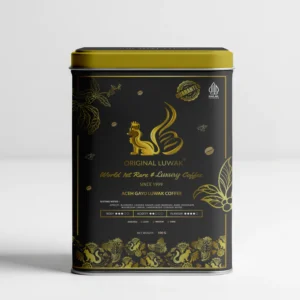
- The Kopi Luwak Coffee Gift Tin, currently $99, is built for handing over: a sealed tin that arrives presentable, ground for drip so the recipient needs no grinder. The trade-off is that you pay for presentation alongside the coffee.
- A paid sample pack at USD 100 exists for buyers who need to taste before committing to a gift or a corporate order. It costs money by design, which filters out casual requests.
Frequently Asked Questions
Is kopi luwak safe to drink every day?
Yes, at normal coffee volumes. One cup delivers roughly 95 mg of caffeine according to Healthline, so two to three cups sit inside the intake most healthy adults tolerate. Daily drinking is more often limited by cost and batch scarcity than by any safety ceiling on the coffee itself.
Is kopi luwak safe to drink during pregnancy?
Not without medical advice. Caffeine, not civet processing, is the variable that matters in pregnancy, and Healthline lists pregnancy among the situations where coffee should be limited or avoided. Roasted kopi luwak measured 0.47% caffeine in a 2019 comparison, lower than regular Arabica but far from caffeine free.
Is kopi luwak safe to drink if the civets were caged?
Microbiologically yes, ethically no. Roasting sterilizes beans regardless of how the animal was housed, so caged coffee is not a health hazard in the cup. PETA investigations document confinement, restricted diets, and untreated illness on farms, which is why sourcing, not sterility, is the deciding factor for most buyers.
How can a buyer tell whether a batch is genuinely wild?
Ask for collection records, not adjectives. Genuine wild sourcing names a location, a season, and a collector network, and it accepts small volumes as a constraint. Producers who promise unlimited stock of wild kopi luwak are describing caged output. Third party cupping by a certified Q Grader adds a second, independent check.
Does kopi luwak contain less caffeine than regular coffee?
Usually, but the evidence is not unanimous. A 2019 comparison in the Journal of Applied Agricultural Science and Technology measured 0.47% caffeine in roasted kopi luwak against 0.61% in roasted Arabica. A separate 2023 metabolite analysis reported higher caffeine in kopi luwak than in washed Arabica, so treat any single figure with caution.
Which format works better as a gift, a pouch or a box?
The tin, if presentation carries weight. The Kopi Luwak Coffee Gift Tin arrives sealed and ready to hand over, ground for drip so the recipient needs no equipment. The 100 g pouch suits personal drinking and repeat orders, and lets you choose whole bean or ground. Buyers who need certainty first can order a paid sample.
The Decision, in Short
Is kopi luwak safe to drink? Processing settles it, not marketing. Roasting removes the microbiological question. Verified sourcing removes the ethical one. Original Luwak sells wild free-roaming civet kopi luwak from Aceh Tengah, checks every batch through a CQI-certified Q Grader, holds Halal certification, and has worked in small batches and gift-ready formats since 2008.
Explore the full range at Original Luwak to see current batches, formats, and what is actually available this season. Small batches sell out, so the lineup shifts. If you are buying a gift and want certainty before you commit, request a paid sample first, then choose the 100 g pouch or the gift tin that fits.