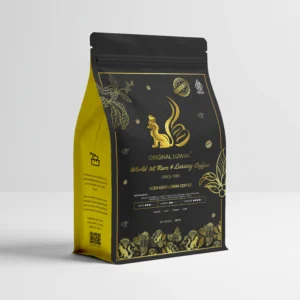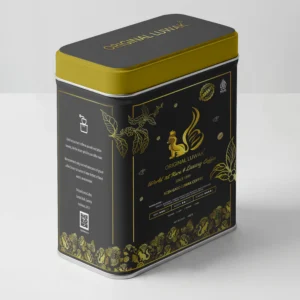




The luwak coffee making process turns ordinary Arabica cherries into the world’s most expensive coffee through one stage no other coffee has: digestion inside a wild animal. Luwak Coffee, known in Indonesia as Kopi Luwak and internationally as civet coffee, is produced when the Asian palm civet (Paradoxurus hermaphroditus) eats ripe coffee cherries, ferments the beans in its gut, and passes them intact.
Collectors gather the beans, then clean, dry, sort, and roast them like any specialty lot. This guide walks through every stage of the kopi luwak coffee process as we handle it at our own wild plantation in Central Aceh, Sumatra.
Kopi Luwak earns its “most expensive coffee” reputation for two concrete reasons: annual wild yield is measured in hundreds of kilograms rather than tonnes, and each bean is hand-collected, then cut roughly in half at sorting. That scarcity, plus the enzymatic change digestion creates, is why authentic wild green Luwak opens at $50 per kg wholesale while gift-pack retail can exceed $1,000 per kg.
1. Coffee Cherry Selection
The luwak coffee process starts before any human touches a bean. Cherry selection is done by the civet itself, which sets the quality ceiling for the entire lot.
Where conventional coffee relies on a picking crew, Kopi Luwak relies on the Asian palm civet, which roams the coffee garden at night and eats only the cherries it prefers, using smell and taste to find fruit at peak ripeness.
Ripeness at harvest is the single largest flavor variable a producer controls, and the civet gets it right: a green cherry never develops full sweetness, an over-ripe one turns to defect, and the animal skips both.
What Type of Coffee Cherries do Civet Cats Eat?
Civets eat ripe Arabica cherries almost exclusively when both Arabica and Robusta grow nearby, choosing only the ripest, sweetest, undamaged fruit. Our Kopi Luwak is 100% Arabica, sourced where civets range across Sumatran Arabica gardens.
The animal is a natural quality gatekeeper. Free-roaming civets select cherries at peak Brix (maximum natural sugar), rejecting the unripe, damaged, or diseased fruit a mechanical harvest sweeps up. This is why premium wild examples come from Arabica origins such as the Gayo Highlands of Aceh and other Sumatran wild-bean regions: the base cherry is already specialty grade before digestion begins.
2. Civet Consumption and Digestion
Digestion is the stage that makes Kopi Luwak different from every other coffee. Once the civet swallows a ripe cherry, the fruit pulp is digested, while the hard seed inside passes through the gut largely intact but chemically altered.
No washing station or fermentation tank can reproduce what happens during these hours, which is the core of the kopi luwak coffee process. The stage is short but decisive: it runs roughly 12 to 24 hours, and it both ferments the bean surface and begins breaking down the compounds responsible for bitterness, yielding a green bean that roasts smoother and less acidic than the same cherry processed by hand.
How does the Civet’s Digestion Affect Coffee Cherries?
The civet’s digestion partially ferments each bean and reduces its bitterness through enzymatic action, producing a smoother, less acidic cup. The change is structural to the bean, not a surface flavor added later. Four things happen in sequence:
- Natural selection first. The civet has already picked only the ripest, sweetest cherries, so the beans entering digestion are high quality to begin with.
- Enzymatic breakdown. Proteolytic enzymes and stomach acids act on the bean’s outer layer, hydrolyzing proteins that are precursors to the bitter compounds formed during roasting.
- Partial fermentation. Gut bacteria ferment the bean surface over 12 to 24 hours, altering the organic acid profile and lowering overall acidity.
- Protected seed. The parchment layer stays largely intact, shielding the seed from direct acid exposure so the bean is transformed, not damaged.
Comparative studies published in Food Research International have measured lower protein content in civet-processed beans versus conventionally processed beans from the same plantation, supporting the reduced-bitterness effect tasters consistently report. Because this chemistry depends on the animal’s health and diet, a wild civet on a varied diet produces more complex fermentation than a caged one on coffee cherries alone.
Sourcing Kopi Luwak for your roastery or retail shelf? Every Original Luwak lot is cupped on-site by a licensed Q-Grader before it ships. See current pricing on our luwak collections page or contact our team for a sample.
3. Bean Collection from Feces
Collection is where hygiene and traceability are won or lost. After the civet passes the beans, they emerge in small clustered groups, still encased in parchment, deposited along the animal’s regular trails.
Timely, clean collection is one of the most critical control points in the entire luwak coffee making process, because beans left too long or gathered without records cannot be verified later. The window is narrow: beans must be gathered promptly to avoid moisture damage and contamination, and every batch logged by location and date.
Which Methods are Used to Collect Coffee Beans after the Civet’s Digestion?
Farmers collect Kopi Luwak beans using manual, hand-collection methods that differ mainly by setting:
- Wild forest collection. Collectors follow the civets’ natural trails through the coffee garden at first light and hand-gather the bean clusters from the forest floor. This is the authentic wild method and the source of the highest-quality lots.
- Farm or garden collection. On managed plantations where civets forage within a defined area, crews collect from known deposit sites. Quality holds when the animals roam freely and self-select; it drops when they are caged and force-fed.
- Logged, hygienic handling. Ethical producers record each batch’s location and date, then move beans quickly into cleaning under sanitary conditions.
Hygiene is not optional here. Our beans are thoroughly cleaned, hulled, and treated with ultraviolet light to kill possible bacteria, and later roasting above 200°C makes the finished coffee 100% safe to drink and Halal certified by Majelis Ulama Indonesia (MUI).
4. Washing and Fermentation
Washing removes every trace of outer material and prepares the parchment-covered bean for drying. This stage is essential for both safety and cup clarity: it strips residue from collection and settles the fermentation process, so the green bean that emerges is clean, stable, and ready to grade.
The core factors are water cleanliness, thoroughness, and consistency across the batch. Because the civet’s gut has already done the primary fermentation, washing for Kopi Luwak is about finishing and cleaning rather than initiating flavor, a real difference from a standard washed coffee.
Where does the Cleaning and Fermentation of Civet Coffee Beans Take Place?
Cleaning and fermentation of civet coffee beans take place at the producer’s processing facility or washing station, near the collection site, immediately after the beans are gathered. At Original Luwak, this happens under our own supervision on our Central Aceh land, where the entire harvesting and manufacturing process is controlled in-house rather than handed to third parties.
Can the Washing and Fermentation Process Change the Quality of Civet Coffee?
Yes. Washing and fermentation directly change the quality of civet coffee. Careful, clean washing preserves the smoothness and low acidity digestion created and removes residue that would otherwise cause off-flavors.
Poor washing, dirty water, or uneven handling reintroduces contamination and defects, undoing the natural advantage the civet’s selection and gut fermentation built into the bean.
5. Sorting, Grading, and Defect Removal
Sorting is where a good wild lot becomes a specialty-grade one. After washing and drying, beans are separated by quality, and every defect is pulled out, because a single black, broken, or immature bean can taint an entire cup.
This stage decides the final grade, the price, and whether the lot clears specialty standards at all. It is also where Kopi Luwak’s low yield becomes visible: we keep only about fifty percent of the beans collected and discard the rest. Graders assess against defect count, moisture content, size uniformity, and color, then cup a sample to confirm the score.
Which Methods are used to Remove Defects in Luwak Coffee Beans?
Defects in Luwak coffee beans are removed through a layered process combining machine and hand work:
- Hand-sorting. Trained sorters visually pick out black, broken, insect-damaged, and immature beans, the most important step for a small wild lot.
- Density and size screening. Beans are separated by screen size and density, so under-developed and malformed beans are pulled from the grade.
- Moisture and defect grading. Each lot is checked against defect-value and moisture standards under the Indonesian grading framework (SNI 01-2907-2008) before it can be called specialty grade.
- Q-Grader cupping. A licensed Q-Grader cups a sample against the SCA protocol; lots that fail the score are downgraded or rejected.
Can the quality of Kopi Luwak be improved through better sorting and grading?
Yes. Better sorting and grading measurably improve Kopi Luwak quality. Removing every defective bean raises the cup score, protects consistency between batches, and lifts the lot into specialty grade.
Our Q-Grader holds each batch to a minimum of 83 SCA points, and our April 2026 catalog lots cup at 87 SCA points, a level reachable only when defect removal is strict rather than casual.
6. Drying and Roasting
Drying stabilizes the green bean and roasting develops its flavor, and both carry unusual weight for Kopi Luwak because the bean is rarer and more expensive than any conventional lot. Get either wrong and you have wasted coffee worth many times ordinary Arabica.
Drying brings the beans to a safe, stable moisture level for storage and shipping; roasting then converts the civet-altered green bean into the smooth, aromatic cup buyers expect. The factors that matter most are even moisture reduction during drying and precise heat control during roasting.
Sun-drying on raised beds or patios is traditional and gentle, and roasting is where the low-bitterness, low-acid character is either revealed or buried under too much heat.
Which Roast Level Brings Out the Best Flavor in Luwak Coffee?
A medium roast brings out the best flavor in Luwak coffee, and it is the level we recommend for our green Luwak beans. Medium roasting protects the coffee’s defining traits: the smooth body, gentle sweetness, low acidity, and chocolate and earthy notes that digestion produces.
A light roast can leave the cup thin and underdeveloped for this bean, while a dark roast overwhelms the delicate, low-bitterness profile that makes Kopi Luwak worth its price. Because each batch varies with the civets’ diet and collection location, the ideal point sits in the medium band rather than at a fixed temperature.
Does Luwak Coffee Require a Special Roasting Method?
No. Luwak coffee does not require a special or unusual roasting method, but it does demand careful, attentive roasting. The equipment is standard; the difference is judgment.
Because the beans are expensive and already low in bitterness and acidity, the roaster must avoid over-roasting and watch color and development closely. Roasting above 200°C also serves a safety purpose, killing residual bacteria so the finished coffee is safe and Halal.
7. Cooling, Resting and Cupping
Cooling, resting, and cupping are the finishing stages that confirm the coffee is ready before it reaches a buyer. Immediately after roasting, beans are cooled quickly to halt the roast, then rested (degassed) so the flavors settle and stabilize.
Cupping is the formal quality check that decides whether the batch meets grade. The factors here are cooling speed, adequate resting time before brewing, and disciplined cupping against a fixed protocol.
We personally grade each batch of Kopi Luwak for aroma, flavor, acidity, body, aftertaste, and overall balance. Our Q-Grader, Herry Setiawan, is also a Star Cupper qualified to judge coffee at an international level, and every lot must clear the 83 SCA floor before it ships. The result buyers receive is a smooth, balanced cup with a long, clean aftertaste, verified rather than assumed.
8. Brewing and Tasting
Brewing is the final stage of the luwak coffee process, where the buyer decides whether the previous seven stages were worth it. Kopi Luwak is not brewed very differently from regular coffee, but because it is so expensive, a few steps deserve extra care so the aroma and flavor are not compromised
The factors that matter are water temperature, grind size, brew time, and a clean method that lets the coffee’s smoothness show. Tasting reveals why it is prized: a cup that is clearly not bitter, aromatic, with smooth, earthy, sweet notes and a hint of chocolate.
Because each batch is collected from different locations and the civets eat other fruits alongside coffee, tasting notes shift slightly between batches, a signature of authentic wild Luwak rather than a flaw.
Which Brewing Method Brings Out the Best Flavor in Luwak Coffee?
Several brewing methods suit Kopi Luwak, and the best one preserves clarity and body without adding bitterness:
- Pour-over (filter). Produces the cleanest, most aromatic cup and highlights the smooth, low-acid character.
- French press (cafetiere). Delivers full body and mouthfeel, letting the syrupy weight and chocolate notes come forward.
- Espresso. Concentrates the sweetness and body into an intense shot, popular for menus showcasing a premium single origin.
- Percolator and traditional stovetop. Simple and forgiving, common in Indonesian home preparation.
Pour-over is the best method for most buyers because it gives the most control over temperature and contact time and produces the cleanest expression of the cup. That control is exactly what an expensive, low-bitterness coffee needs: it lets the civet-driven smoothness and aromatics show, where a rushed or over-extracted brew would waste the bean’s advantage.
Can Luwak Coffee be Brewed Using Traditional Methods?
Yes. Luwak coffee can be brewed using traditional methods, and it often is. A simple pour-over or a French press are both traditional, low-tech approaches that suit Kopi Luwak well.
Warm the water to around 90 to 96°C, use freshly ground beans, and keep the pour slow and even. These methods need no special equipment and let the coffee’s natural smoothness and aroma come through cleanly.
Which Luwak Coffee Flavour is the Most Difficult to Process?
The most difficult Luwak flavour to process is a clean, bright, high-acidity profile, because the civet’s digestion naturally pushes the cup toward low acidity and smoothness. Kopi Luwak’s whole character comes from reduced bitterness and softened acids, so preserving any crisp, citric brightness through digestion, washing, drying, and roasting runs against the grain of the process.
The difficulty is compounded by batch variation. Wild civets eat different fruits and forage different plots, so acidity and clarity shift between batches and cannot be dialed in the way a washing station controls a conventional lot.
Holding a delicate, bright note also demands flawless washing and a precise medium roast, since any over-fermentation or excess heat flattens the very brightness the roaster is trying to keep. That is why smooth, earthy, chocolate-forward profiles are the reliable Kopi Luwak signature, and bright, acidic ones are the exception that is hardest to achieve.
How is Wild Luwak Coffee different from Farmed Luwak Coffee?
The main difference is animal welfare and the freedom to self-select cherries, which together drive a large gap in quality, ethics, and price. Wild Luwak Coffee comes from free-roaming civets that choose their own ripe cherries in the forest.
Farmed (caged) Luwak Coffee comes from confined civets fed whatever cherries they are given, often supplemented with rice or commercial feed, which flattens both the selection advantage and the fermentation chemistry. Industry and welfare estimates put caged or counterfeit production at over 80% of the global market, so this distinction is the buyer’s first authenticity check.
| Aspect | Wild Luwak Coffee | Farmed (Caged) Luwak Coffee |
|---|---|---|
| Source of Civets | Free-roaming wild Asian palm civets | Caged or penned civets in captivity |
| Diet of Civets | Varied: fruit, insects, self-selected ripe cherries | Monotonous, force-fed coffee cherries, sometimes rice or feed |
| Coffee Bean Selection | Civet picks only the ripest, sweetest cherries | Animal eats whatever it is given, ripe or not |
| Flavor Profile | Smooth, complex, low acidity, long finish, more layered | Flatter, less complex, inconsistent |
| Processing Method | Hand-collected from wild trails, logged and traceable | Collected from cages, often poor traceability |
| Production Volume | Very low: hundreds of kg per year | Higher, scaled through confinement |
| Price | Premium: green from $50/kg wholesale, far higher at retail | Lower: roughly $25 to $35/kg green from other suppliers |
| Market Availability | Rare, small batches, sells out fast | More common, dominates the mass market |
What makes the Luwak Coffee Process Different from Regular Coffee Production?
The Luwak coffee process differs from regular coffee production in one decisive way: an animal replaces the machine at both the selection and fermentation stages. In regular coffee, humans pick the cherries and a washing station or drying patio ferments the beans; in Kopi Luwak, the Asian palm civet selects the ripest cherries and its digestive tract ferments the beans over 12 to 24 hours.
Everything after collection, that is washing, drying, sorting, roasting, and brewing, mirrors conventional specialty processing. What sets Kopi Luwak apart is the biological pre-processing step no other coffee has, which is also why the yield is tiny and the price is the highest in the world.
Which Regions are Famous for their Unique Luwak Coffee Processing Methods?
Several Indonesian regions are known for distinct Luwak coffee, shaped by the local Arabica base and processing tradition. The most famous origins are Aceh Gayo (Sumatra), Bali Kintamani, Java, and Toraja (Sulawesi).
Each pairs the same civet pre-processing step with its own regional cherry-processing and hulling methods, so the finished cup reflects both the animal and the terroir.
What makes Aceh Gayo Luwak Coffee Unique in its Processing Method?
Aceh Gayo Luwak is the benchmark and the origin we source. It comes from wild civets in the high-altitude Gayo Highlands of Central Aceh, where the Arabica base is already specialty grade.
After collection, the beans are semi-washed at the cherry stage, then manual dry-hulled, and finished with a recommended medium roast. That Sumatran wet-processing heritage, combined with the civet’s fermentation, gives Gayo Luwak its deep, smooth, earthy, chocolate-forward character and its reputation as the original and best place to collect wild Kopi Luwak.
How is Bali Kintamani Luwak Coffee Processed to Achieve Its Distinct Flavor?
Bali Kintamani Luwak comes from the Kintamani Highlands near Lake Batur, an Arabica region known for brighter, citrus-leaning cups. Kintamani Arabica is typically fully washed or processed as natural and honey, all dry-hulled at low moisture, a cleaner, higher-clarity route than Sumatran wet-hulling.
Passed through the civet, that brighter base yields a Bali Luwak that keeps more citrus and floral lift alongside the smoothness digestion adds, a lighter, more aromatic profile than the earthy Sumatran style.
Why is Java Luwak Coffee Known for its Traditional Coffee-making Techniques?
Java Luwak is known for traditional techniques because Java is where Indonesian estate coffee production began under long-established plantation methods. Javanese Arabica is generally fully washed and dry-hulled, a clean, classic route that produces a heavier-bodied, low-acid cup even before the civet stage.
Chemical studies of civet-processed and conventional beans from the same Javanese origin have documented the measurable difference digestion makes. Java Luwak reflects this heritage: a smooth, full, traditionally processed coffee grounded in the island’s centuries-old coffee-making practice.
What Defines the Processing Style of Toraja Luwak Coffee from Sulawesi?
Toraja Luwak from the Sulawesi highlands is defined by the same wet-hulled (Giling Basah) processing that gives Sulawesi and Sumatran coffees their signature. The Arabica cherries are semi-washed, then wet-hulled (Giling Basah) at high moisture before further drying, a method that produces heavy body, low acidity, and dark, earthy depth.
Run through the civet, Toraja Luwak becomes an especially rich, full-bodied, smooth cup, distinct from the brighter dry-hulled Bali style and closely related to the Sumatran Gayo profile.