

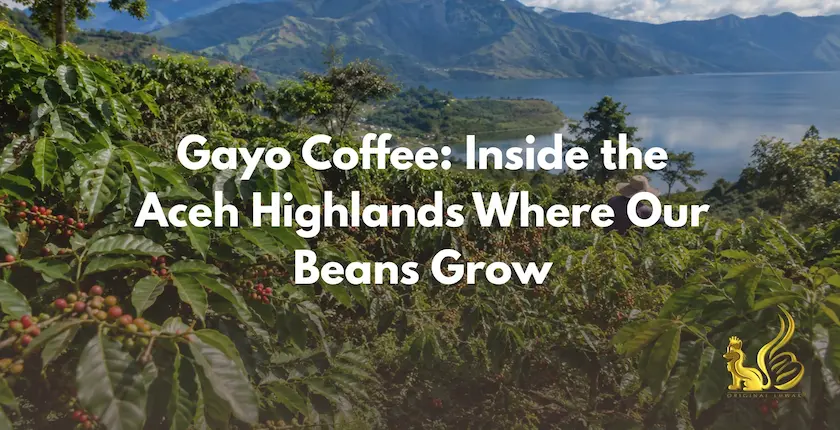
Gayo coffee is Arabica grown on the Gayo highlands of Aceh, at the northern tip of Sumatra; the gardens Original Luwak works with sit between 1,200 and 1,700 metres above sea level. It is the coffee our civets eat, and the coffee behind every pouch Original Luwak sells. Most guides describe Gayo from a desk. This one is written from Kecamatan Ketol in Aceh Tengah, where our office sits inside the growing area, and it covers what the region actually is, what grows here, why the cup is cleaner than most Sumatran coffee, and where the civets come in.
Last updated: 30 September 2026
What Gayo Coffee Is
Gayo coffee is the Arabica grown across three highland regencies in Aceh: Aceh Tengah, Bener Meriah and Gayo Lues. Since 2010 the name has been protected as a geographical indication, Kopi Arabika Gayo, held by the Gayo Coffee Protection Community, known locally as MPKG. The protected area runs from 900 to 1,700 metres, and only coffee grown and processed inside it may carry the name. The certificate was presented to the Aceh Tengah government by the Minister of Law and Human Rights in Jakarta at the end of May 2010; the local press noted at the time that Aceh Tengah coffee had until then been exported under Dutch labels.
The centre of the region is Takengon, the district town of Aceh Tengah, on the shore of Lake Laut Tawar. The gardens climb the slopes around the lake and spread north into Bener Meriah. The coffee is Arabica, single-origin, hand-picked, and it takes about nine months to move from flower to ripe cherry at this altitude.
Two things separate Gayo coffee from the image you probably hold of Sumatran coffee. First, altitude: the gardens Original Luwak works with sit at 1,200 to 1,700 metres, in the upper part of the protected zone. Second, processing, which we come back to below, because it decides whether the cup you get tastes clean or muddy.
The Harvest Areas Around Takengon
Original Luwak collects from six named harvest areas in the Gayo highlands: Takengon, Bener Meriah, Angkup, Sukarame, Bies and Pondok Baru. Our office is in Desa Pondok Balik, Kecamatan Ketol, a village inside that same belt, which is why we can name the areas rather than say “the highlands of Sumatra” and leave it there.
The table below lists what we verify about the growing conditions in those areas. Every figure is one we publish on our own site, not an estimate.
| Growing condition | Verified figure |
|---|---|
| Altitude of the gardens | 1,200 to 1,700 metres above sea level |
| Soil | Volcanic |
| Position | Just north of the equator |
| Species | Arabica, single-origin |
| Flower to ripe cherry | About nine months |
| Picking | By hand |
An observation you only make by standing in these gardens: the coffee is rarely planted alone. Shade trees, fruit trees and forest edge run through the plots, and that mixed cover is the reason the Asian palm civet lives here at all. A civet on a cleared, single-crop hillside has nothing to eat for most of the year. A civet on a Gayo slope has figs, fruit, insects and, for a few months, the ripest coffee cherries it can find. How the civet and the coffee first met is the subject of our guide to kopi luwak origin.
What the Highlands Do to the Bean
Height slows a coffee cherry down. At 1,200 to 1,700 metres the nights are cool, the cherries ripen over roughly nine months, and the bean inside grows dense and hard. Dense beans hold their acidity and their sugars through roasting, which is why high-grown Gayo coffee reads bright rather than flat. The volcanic soil across Aceh Tengah drains well and feeds the trees without the heavy, earthy note that waterlogged ground pushes into a cup.
Processing then decides what you actually taste. Across Sumatra the common method is wet-hulling, giling basah, where the parchment is stripped from the bean while it is still wet and the coffee finishes drying naked. It is fast, and it gives Sumatran coffee its familiar heavy, earthy, low-acid character. Original Luwak does not process this way. Our beans are semi-washed and manually dry-hulled: the parchment stays on until the bean has dried to a stable moisture, then it is removed by hand. The result is a cleaner cup, with the herbal, gently spicy character of Gayo coffee still in it instead of buried under weight.
For kopi luwak the civet adds one more step before any of this, and the collection, cleaning and drying of those beans is its own subject. We walk through every stage in our guide to the luwak coffee process.
Every 100 g pouch we sell is Gayo Arabica from these six harvest areas, passed by wild civets, semi-washed and dry-hulled by hand, and roasted to order.
Where the Civets Come In
Gayo coffee becomes kopi luwak when an Asian palm civet, Paradoxurus hermaphroditus, eats the ripe cherry and passes the seed. That can happen in two very different ways. In caged production, civets are confined and fed a coffee-only diet to force volume, and the coffee can come from anywhere. In wild production, free-roaming civets choose ripe cherries from their own range, and the yield is whatever the season gives. Original Luwak sources only the second, from the forest edges and shade-grown gardens around Aceh Tengah, and has done since 2008.
That is the whole reason the origin matters. A caged civet fed nothing but coffee is not eating normally, and the argument that its digestion improves the bean stops being plausible. A wild civet on a mixed Gayo diet is. Our collectors work the civets’ feeding range at forest edges and in shade-grown gardens, and the beans are traceable to the six harvest areas named above. The sourcing is verified through MPKG certification, from the Gayo Coffee Protection Community that also holds the Gayo geographical indication, and documented on our certifications page alongside our Halal certification and AEKI-AICE membership. If you want the longer version of how a company from Ketol came to sell wild kopi luwak to the rest of the world, our story covers it.
Every batch is then specialty graded and cupped at 84+ by a CQI-certified Q Grader before it is roasted. The cup opens with a fresh, nutty aroma of vanilla and chocolate with almond underneath, reads herbal and refreshing with a gentle spice through the middle, and finishes clean. Soft to medium acidity, mild body. Notes move between batches, because different forest areas and different roast levels move them, and we say so rather than promise one fixed profile.
Gayo Coffee Against the Rest of Sumatra
Sumatra grows coffee in several regions, and buyers often meet them as one word on a bag. For the island-wide picture, our guide to what is Sumatra coffee covers the regions and the wet-hulling method. Mandheling and Lintong, both in North Sumatra, are the names most people know, and both are usually wet-hulled, which gives them the heavy body and low acidity the island is famous for. Mandheling Sumatra coffee is really a trade name for Arabica shipped out of Medan; our guide explains where it grows and why its cup runs heavier than ours. Gayo sits further north, and in the hands of a producer who dry-hulls, it makes a different cup.
| Original Luwak’s Gayo kopi luwak | The wet-hulled Sumatran norm | |
|---|---|---|
| Altitude | 1,200 to 1,700 metres for our gardens | Varies by region |
| Usual processing | Semi-washed, dry-hulled by hand (Original Luwak) | Wet-hulled, giling basah |
| Body | Soft and mild | Heavy, syrupy |
| Acidity | Soft to medium | Low |
| Character | Herbal, refreshing, gentle spice, clean finish | Earthy, low-toned |
| Protection | Kopi Arabika Gayo geographical indication since 2010 | Depends on the region |
None of this makes one region better than another. It makes them different, and it means “Sumatran coffee” on a label tells you less than “Gayo” does, and “Gayo, dry-hulled, from named gardens above 1,200 metres” tells you the most of all. If you have only ever had the heavy, earthy version, a Gayo cup will read lighter than you expect. The same rule holds across the archipelago, and our buyer’s guide to Indonesian coffee shows how to read a label from any of its islands.
Frequently Asked Questions
Where is Gayo coffee grown?
Gayo coffee is grown on the Gayo highlands of Aceh, in the north of Sumatra, Indonesia, across the regencies of Aceh Tengah, Bener Meriah and Gayo Lues. The centre of the region is Takengon, on Lake Laut Tawar. The protected growing area runs from 900 to 1,700 metres above sea level.
What does Gayo coffee taste like?
Gayo Arabica from high gardens is brighter and cleaner than most Sumatran coffee, especially when it is dry-hulled rather than wet-hulled. Our wild kopi luwak from Gayo opens nutty, with vanilla, chocolate and almond, then turns herbal and gently spicy, with soft to medium acidity and a mild body.
Is Gayo coffee the same as kopi luwak?
No. Gayo coffee is the Arabica grown on the Gayo highlands of Aceh. Kopi luwak is what that coffee becomes when a wild Asian palm civet eats the ripe cherry and passes the seed. Original Luwak’s kopi luwak is Gayo coffee first, collected from wild civets in six named harvest areas around Takengon.
Why is Gayo coffee a protected name?
Since 2010, Kopi Arabika Gayo has been a registered geographical indication in Indonesia, held by the Gayo Coffee Protection Community, MPKG. Only Arabica grown and processed inside Aceh Tengah, Bener Meriah and Gayo Lues may carry the name. The same body issues the MPKG certification that verifies Original Luwak’s sourcing.
Try Wild Kopi Luwak from the Gayo Highlands
Original Luwak sells wild kopi luwak coffee grown in the Gayo highlands of Aceh Tengah, collected from wild, free-roaming civets in six named harvest areas, verified through MPKG certification, and cupped at 84+ by a CQI-certified Q Grader before it is packed. We roast to order in light, medium or dark, whole bean or ground, and ship worldwide from Aceh.
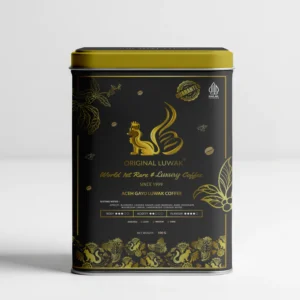
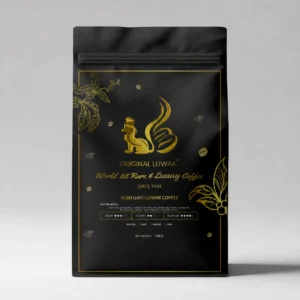
The 100 g pouch is $79 and gives you roughly seven cups; the 100 g gift tin is $99 and arrives with an engraved box and a tasting card. If you want to know how those figures sit against the rest of the market, our kopi luwak price guide lays it out. When you are ready, buy kopi luwak direct from the people who collect it.