

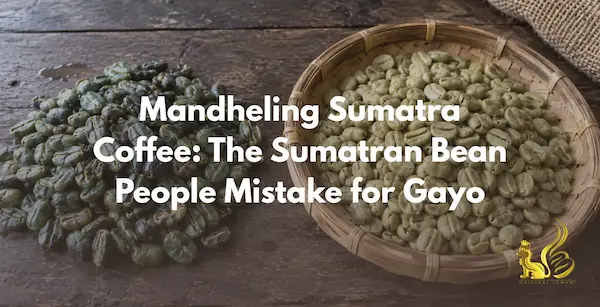
Mandheling Sumatra coffee is one of the best-known names in the coffee trade and one of the least precise: it is a trade name for Arabica from northern Sumatra, not a single farm, village or valley. This guide covers where the name comes from, where the coffee grows in North Sumatra, the wet-hulling method that gives it its earthy weight, and why it is so often confused with the Gayo Arabica we collect one province to the north, in Aceh Tengah.
What Mandheling Sumatra Coffee Actually Is
Mandheling Sumatra coffee is Arabica from the north of Sumatra, Indonesia, sold under a name that describes a style more than a place. A report for an FAO project on preventing mould in coffee calls Mandheling “the generic name for the range of coffees from Northern Sumatra, exported out of the port of Medan”, known for a spicy flavour, a complex, earthy body and low acidity.
The same report lists the names these coffees trade under: Mandheling Grade 1, 2 and 3, Triple Picked Mandheling, Lintung grades and Gayo Mountain Grade 1, with Arabica leaving Medan from two provinces, North Sumatra and Aceh. So the word on the bag tells you the port and the style.
It does not tell you the hillside. Sumatra is also one of the places Indonesian kopi luwak coffee comes from, including ours. Original Luwak is Gayo Arabica from Aceh Tengah, in Aceh province, which borders North Sumatra to the north. Same island, different province, different processing.
Where the Name Comes From: the Mandailing and the Port of Medan
The name Mandheling sits very close to Mandailing, one of the Batak peoples of North Sumatra. Britannica’s entry on the Batak lists the Mandailing alongside the Toba, Karo, Simalungun, Pak Pak and Angkola: closely related groups of north-central Sumatra whose ancestors lived in the highlands surrounding Lake Toba.
The coffee trade tells its own story. The FAO report says the Mandheling description “appears to have originated” with a Japanese buyer who returned to Medan in 1969 seeking a coffee he had tasted in Sumatra during the Second World War, sold by local people whose home appears to have been Mandheling. The report hedges, and so should you: this is the trade’s account, not a documented etymology.
What is settled is how the name works today. The FAO report treats Mandheling as a matter of character: coffee with good Mandheling character, it notes, commands a premium over the New York “C” coffee price. The label travels with the style, not with a map reference.
Giling Basah vs Semi-Washed: Two Ways to Hull a Sumatran Bean
Processing is a large part of what gives Mandheling Sumatra coffee its signature. The method is giling basah, the Indonesian term for wet hulling. In the trial the FAO report describes, the cherry was pulped, fermented and washed, the parchment was given half a day of skin drying, and then the still-wet parchment was hulled at between 35 and 50 percent moisture. The naked green bean finishes drying afterwards, down to about 12 percent. The report’s conclusion is direct: rapid wet hulling after fermentation and washing “gives the best chance of producing Mandheling character”.
Original Luwak does not wet-hull. Our Gayo Arabica from Aceh Tengah is semi-washed and manually dry-hulled: the parchment stays on until the bean has dried to a stable moisture, and only then is it removed by hand. The finished green coffee sits under 13 percent moisture. The cup you get keeps its fruit instead of the heavy, earthy weight wet-hulled Sumatran coffee carries.
Our coffee also has a step Mandheling never sees: the civet. Kopi luwak is produced in two very different ways. In caged production, civets are confined and fed a coffee-only diet to force volume. In wild production, free-roaming civets select ripe cherries from their natural range, and the yield is whatever the season gives. Original Luwak sources only the second, then cleans, dries and dry-hulls the beans. If you want the full sequence, our page on how is kopi luwak made follows a bean from the forest floor to the roaster, and the luwak coffee process guide covers each stage in detail.
The table below sets the two routes side by side, so you can see where the cups part ways.
| Mandheling (wet-hulled) | Original Luwak (semi-washed, dry-hulled) | |
|---|---|---|
| Where from | Northern Sumatra, exported through Medan; a trade name | Aceh Tengah, six named harvest areas |
| When the parchment comes off | Still wet, at 35 to 50 percent moisture | After drying, by hand |
| Final moisture | Dried to about 12 percent after hulling | Under 13 percent |
| Cup | Spicy flavour, complex earthy body, low acidity (FAO report) | Nutty, vanilla, chocolate, almond; herbal with gentle spice; soft to medium acidity, mild body |
| Grading | Trade grades: Grade 1 to 3, Triple Picked | Specialty graded, cupped at 84+ by a CQI-certified Q Grader |
To taste the dry-hulled side of Sumatra, you can buy kopi luwak direct from Aceh Tengah, roasted to order and shipped worldwide.
Where It Grows: Lintong, Sidikalang and the Lake Toba Highlands
Lake Toba sits at the centre of North Sumatra’s Batak highlands, the homeland Britannica describes. A 2024 overview of the province’s coffee in the Journal of Tropical Estate Crops, by Raudha Anggraini Tarigan and Tumpal H.S. Siregar, records 63,339 hectares of Arabica in North Sumatra and describes plantations in nine districts at 800 to 1,600 metres above sea level.
The same paper names three specialty coffees for the province:
- Mandheling, managed in South Tapanuli, North Tapanuli, Simalungun and Deli Serdang
- Lintong, from Lintong Nihuta in Humbang Hasundutan regency, which the authors describe as clean, with a distinctive taste
- Sidikalang, named alongside the other two as one of the province’s specialty Arabicas
You will notice what the list leaves out: Aceh. Gayo grows in a different province, on the Gayo highlands around Takengon, and the gardens Original Luwak works with sit at 1,200 to 1,700 metres. The two provinces share an island and an export port, not a name.
Mandheling or Gayo? How to Read a Sumatran Label
Mandheling and Gayo get confused because they can leave Sumatra through the same door. The FAO report lists Gayo Mountain Grade 1 next to the Mandheling grades among the Arabica shipped from Medan. If you are holding a bag of Sumatran coffee and want to know what it is, three questions do most of the work:
- Which province? North Sumatra points to Mandheling, Lintong or Sidikalang; Aceh points to Gayo.
- Which processing? Wet-hulled, or giling basah, gives the classic Mandheling weight. Semi-washed and dry-hulled gives a cleaner cup.
- Who graded it? A trade grade is a sorting category; a cupping score from a CQI-certified Q Grader tells you how the coffee tastes.
If you buy from Original Luwak, you get an answer to all three. Our coffee is Gayo Arabica from Aceh Tengah, semi-washed and manually dry-hulled, not wet-hulled, and it is not Mandheling. It is collected from wild, free-roaming civets in six named harvest areas: Takengon, Bener Meriah, Angkup, Sukarame, Bies and Pondok Baru. The sourcing is verified through MPKG certification from the Gayo Coffee Protection Community, which covers responsible sourcing and the protection of animal welfare, and is documented on our certifications page with our Halal certification and AEKI-AICE membership.
One thing you learn working from our office in Desa Pondok Balik, Kecamatan Ketol: a trade name is what a coffee carries when nobody further down the line needs to know which garden it came from. A lot you can trace to a named village does not need one. That traceability is the whole idea behind wild kopi luwak as we have sold it since 2008.
Frequently Asked Questions
Where does Mandheling coffee come from?
Mandheling coffee comes from northern Sumatra, Indonesia, and is exported through the port of Medan. The name is a trade label rather than one region. A 2024 paper places Mandheling in South Tapanuli, North Tapanuli, Simalungun and Deli Serdang, all in North Sumatra province, with Lintong and Sidikalang named as separate specialty coffees.
Why does Mandheling coffee taste earthy?
Processing is a large part of it. Mandheling is wet-hulled, giling basah in Indonesian: the parchment is stripped while the bean is still wet, at roughly 35 to 50 percent moisture, and the naked bean finishes drying afterwards. An FAO project report links this rapid wet hulling to Mandheling character: a spicy flavour, an earthy body and low acidity.
Is Mandheling the same as Gayo?
No. Mandheling is a trade name for Arabica from North Sumatra. Gayo is Arabica from the Gayo highlands of Aceh, a different province, protected as a geographical indication since 2010. Both can be shipped through Medan under export grades, which is why buyers mix them up. Original Luwak’s Gayo is dry-hulled by hand, not wet-hulled.
Is Original Luwak coffee wet-hulled?
No. Original Luwak is Gayo Arabica from Aceh Tengah, semi-washed and manually dry-hulled. The parchment stays on until the bean has dried to a stable moisture and is then removed by hand. The cup reads clean, nutty and herbal rather than heavy, and every batch is graded specialty and cupped at 84+.
Order Dry-Hulled Kopi Luwak from Original Luwak
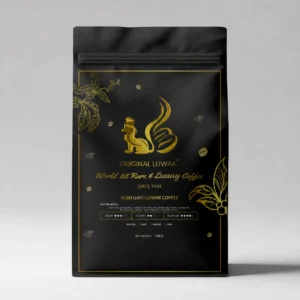
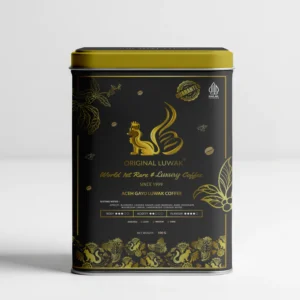
Original Luwak sells kopi luwak from the Gayo highlands of Aceh Tengah, collected from wild civets that were never caged and never force-fed, verified through MPKG certification, and cupped at 84+ by a CQI-certified Q Grader before it is packed. The beans are semi-washed and dry-hulled by hand. We roast to order in light, medium or dark, whole bean or ground, and ship worldwide from Aceh.
The 100 g pouch is $79 and gives you roughly seven cups. The 100 g gift tin is $99 and arrives with an engraved box and a tasting card. Our kopi luwak price guide shows how those figures sit against the market. When you are ready, buy kopi luwak direct from the people who collect it.