

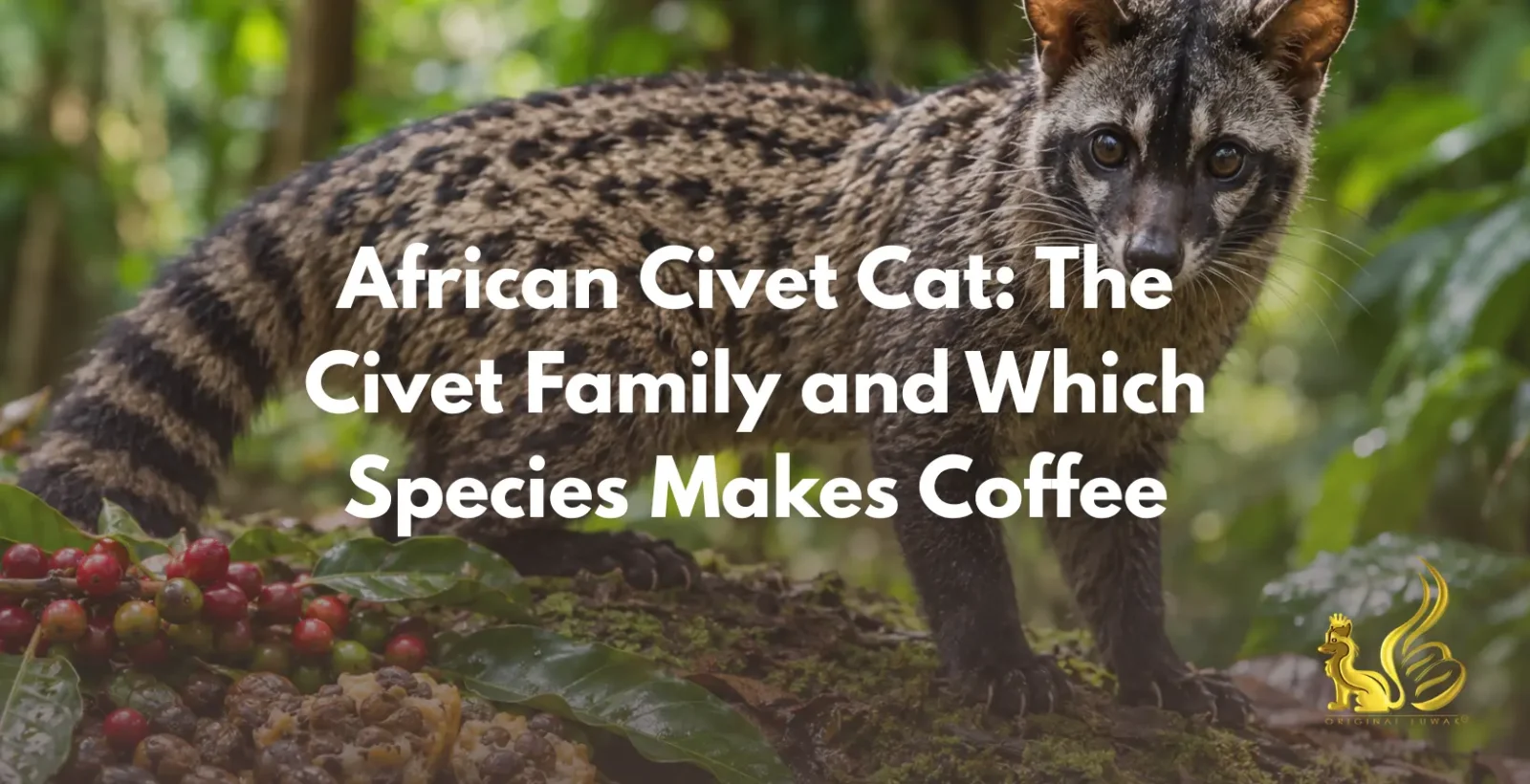
The African civet cat is not a cat. It is Civettictis civetta, a heavy, nocturnal, ground-living member of the civet family that ranges across the savannahs and forests of sub-Saharan Africa. It is also the civet behind most of the historical musk trade, which is why its name keeps turning up next to coffee. This guide covers what the African civet is, how it compares with the other civets people confuse it with, and which species actually produces the coffee in your cup. We write from Aceh Tengah, Sumatra, where the only civet we deal with is a much smaller Asian one.
Last updated: 20 October 2026
African Civet Cat at a Glance
Animal Diversity Web, the species database run by the University of Michigan, sets out the core facts in its account of Civettictis civetta:
- Weight: about 12 to 15 kilograms as an adult.
- Range: savannahs and forests of southern and central Africa, following rivers north into Niger, Mali and Chad.
- Activity: nocturnal, most active from an hour or two before sunset until about midnight.
- Social life: solitary outside the breeding season.
- Diet: omnivorous, from wild fruit and insects to rodents, eggs, reptiles, birds and carrion.
- Lifespan: 15 to 20 years on average, longer in captivity.
- Status: Least Concern, and listed on CITES Appendix III.
It resembles its nickname only at a glance. The face carries a dark mask much like a raccoon’s, the neck has white stripes, the silver or cream coat is marked with dark spots, and a short mane runs down the back that stands up when the animal is excited or scared. Up close, nothing about it is feline.
Why It Is Called a Civet Cat, and Why It Is Not One
“Civet cat” is an old trade and travel name, given because of the low body, long tail and pointed face. Biology files the animal elsewhere. Civets belong to the family Viverridae, which Animal Diversity Web’s overview of the Viverridae family puts at 34 species in 20 genera, many of them striped, spotted or banded, with ringed tails. True cats, from house cats to lions, are Felidae, a separate family.
The other family people reach for is the mongoose. That is wrong too, and our civet vs mongoose guide explains why the two look alike and live differently. What sets civets apart is scent. Most carry glands under the tail that produce a strong-smelling secretion. The African civet marks its ground by crouching and pressing its perineal glands against objects, and it leaves its droppings in regular dung piles that carry the same scent. It is vocal too: Animal Diversity Web lists a growl, a cough-spit and a scream, plus a “ha ha ha” contact call heard more often than any of them.
The Civet Family Side by Side
“Civet” covers animals that differ more than the shared name suggests. Weights and notes below come from the Animal Diversity Web account for each species:
| Species | Typical adult weight | Where it lives | Worth knowing |
|---|---|---|---|
| African civet (Civettictis civetta) | 12 to 15 kg | Sub-Saharan Africa | The main historical source of civet musk |
| Asian palm civet (Paradoxurus hermaphroditus) | 1.3 to 5 kg, about 3 kg on average | South and Southeast Asia | The species behind kopi luwak |
| Masked palm civet (Paguma larvata) | 3.6 to 5 kg | Northern Pakistan to China, Taiwan, Sumatra and Borneo | Eats mainly fruit |
| Large Indian civet (Viverra zibetha) | 5 to 11 kg | Nepal and Bangladesh to Vietnam and the Malay Peninsula | Near Threatened; its secretion is also used in perfume |
| Small Indian civet (Viverricula indica) | 2 to 4 kg | South Asia to Sumatra, Java and Bali | Lives mostly on the ground; bites if cornered |
| Binturong (Arctictis binturong) | 9 to 20 kg | South and Southeast Asia | The largest member of the family; its scent is likened to popcorn |
Two things stand out. Of these six, only the binturong can outweigh the African civet, which is four or five times the weight of the average Asian palm civet. And the six are spread across two continents, so a fact about one tells you little about another.
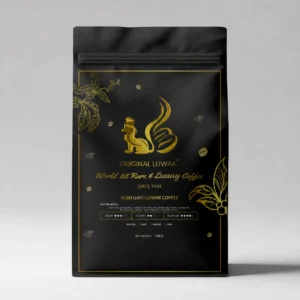
Our 100 g pouch comes from wild Asian palm civets in Aceh Tengah, never caged, cupped at 84+ by a CQI-certified Q Grader and roasted to order.
Where the African Civet Lives and What It Eats
The African civet needs cover and water. It lives in savannah and forest, and it pushes north along river systems into the Sahel countries, which is why its range on a map has fingers rather than a clean edge. It sleeps through the day in the dense grass of thickets, usually close to permanent water, and comes out to forage before sunset.
Its diet is wide. Fruit matters, but so do insects, rodents, eggs, reptiles, birds and carrion. Animal Diversity Web notes that it can eat Strychnos fruit and millipedes, both of which most predators avoid. It has a reputation with farmers as well: it raids henhouses and may kill lambs. Compare that with the Asian civet we work alongside. The Asian palm civet weighs about a fifth as much, spends much of its time in trees, and eats mostly fruit. Our Asian palm civet habitat guide maps where that species lives, from India to the Philippines and up into the highland forest of Sumatra.
The African Civet and the Musk Trade
For most of history, the African civet mattered to people for its scent glands, not its coffee. The paste it produces was a perfume fixative for centuries, and the trade was large. Animal Diversity Web, citing Nowak (1999), reports that in 1988 more than 2,700 African civets were held in captivity in Ethiopia for their musk, most of which was exported to France at about $438 per kilogram.
Our guide to civet musk follows that history and explains why most perfumers now work with a synthetic instead. The pattern is worth noticing: civets kept in captivity to produce something people buy. It is the same question that sits behind civet coffee.
Which Civet Makes Coffee?
The coffee sold around the world as kopi luwak comes from one species, the Asian palm civet, Paradoxurus hermaphroditus, documented in Animal Diversity Web’s account of the Asian palm civet. It eats ripe coffee cherries, digests the fruit, and passes the seed. If you want the coffee side of that story, our guide to what is civet coffee covers the definition, the names and how the beans are processed.
The African civet has a small place in the science. Marcone’s 2004 study in Food Research International analysed Indonesian palm civet coffee alongside a civet coffee from Ethiopia, African civet country, and treated them as two separate products. Neither the study nor the trade turns the African civet into the source of kopi luwak. The animal itself has its own page: our kopi luwak animal guide explains what the luwak is and how its digestion changes the bean.
How the civet lives matters more than which species it is. Caged production keeps civets in pens and feeds them cherries; that is a different and cheaper product. Our wild kopi luwak is collected from the droppings of free-roaming civets in the Aceh Tengah highlands, at 1,200 to 1,700 metres. Our certifications page lists what stands behind that claim, from MPKG and Halal certification to cupping by a CQI-certified Q Grader.
Frequently Asked Questions
Is the African civet cat a cat?
No. The African civet, Civettictis civetta, belongs to the civet family, Viverridae, not to Felidae, the family of true cats. The name civet cat comes from its low body, long tail and pointed face. Its closest relatives are other civets and genets, and it is a separate family from both cats and mongooses.
How big is an African civet cat?
An adult African civet usually weighs about 12 to 15 kilograms, according to Animal Diversity Web. That makes it several times heavier than the Asian palm civet behind kopi luwak, which averages about 3 kilograms. Among civets, only the binturong of Southeast Asia can be heavier.
Is the African civet endangered?
No. Animal Diversity Web lists the African civet as Least Concern. It is also on CITES Appendix III, which means international trade in it is monitored. Its range across sub-Saharan Africa is wide. Farmers treat it as a nuisance in places, and it was once kept in large numbers for its musk.
Does the African civet make kopi luwak?
No. Kopi luwak comes from the Asian palm civet, Paradoxurus hermaphroditus, which eats ripe coffee cherries in Indonesia and other parts of Asia. The African civet is best known for the musk once used in perfume. A 2004 study did analyse a civet coffee from Ethiopia, but it is not the coffee sold as kopi luwak.
Taste Coffee From Wild Civets in Aceh
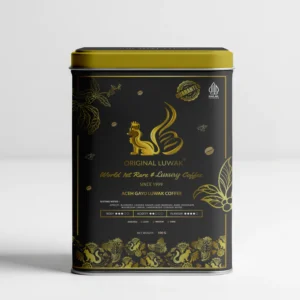
Original Luwak sells kopi luwak coffee from wild, free-roaming Asian palm civets in six named harvest areas of Aceh Tengah, cupped at 84+ and roasted to order, light, medium or dark, whole bean or ground. We ship worldwide.
The 100g pouch is $79 and gives you roughly seven cups. The 100g gift tin is $99. Our kopi luwak price guide puts those figures in context. When you are ready, buy kopi luwak direct from the people who collect it.