


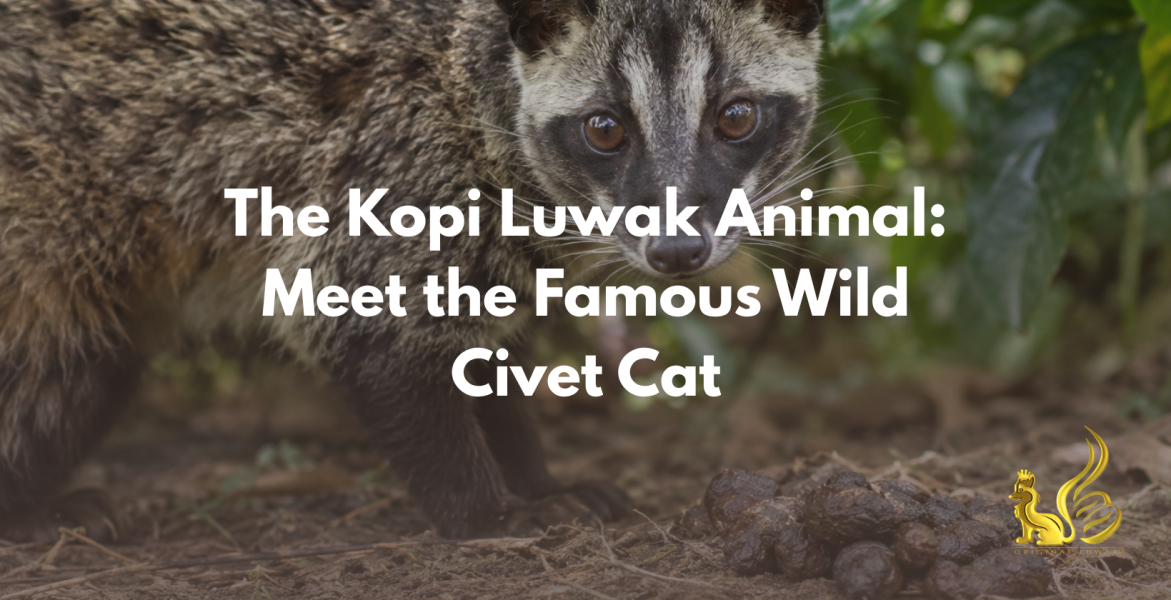
Kopi luwak animal is the Asian palm civet (Paradoxurus hermaphroditus), a small, nocturnal forest mammal that Indonesians call the luwak. It is not a cat, it is not a monkey, and it does not make coffee. It eats ripe coffee cherries, and the beans that pass through it become the world’s rarest coffee. This guide explains what the luwak animal is, why people keep calling it a cat, what its digestion actually does to the bean, and the one question that matters more than any of that: whether the civet behind your coffee was wild or caged.
Last updated: 23 September 2026
What Animal Makes Kopi Luwak?
Kopi luwak is made by the Asian palm civet, and only by the civet. In Bahasa Indonesia the animal is the luwak, so kopi luwak translates, word for word, as civet coffee. The civet is a wild omnivore that lives across South and Southeast Asia, from India to the islands of Indonesia, and it is common enough in the forests around Aceh Tengah that our collectors work its feeding range rather than searching for the animal itself.
Here is the luwak animal in one table:
| Fact | Asian palm civet |
|---|---|
| Scientific name | Paradoxurus hermaphroditus |
| Family | Viverridae (civets and genets), not Felidae (cats) |
| Local names | Luwak (Indonesia), musang (Malaysia, Java), toddy cat (India, Sri Lanka) |
| Size | Roughly house-cat sized: 1.3 to 5 kg, averaging about 3 kg, with a tail as long as its body |
| Activity | Nocturnal, mostly solitary, an agile climber |
| Diet | Fruit first, including ripe coffee cherries, plus insects, small animals, and palm sap |
| Range | India and Sri Lanka east through mainland Southeast Asia, Indonesia, and the Philippines |
| Conservation status | Least Concern, on the strength of a wide range and a stable population |
Figures above follow the University of Michigan’s Animal Diversity Web account for the species.
In the wild, coffee is a seasonal snack for the civet, not a diet. That detail matters later.
Is the Kopi Luwak Animal a Cat?
No. The civet looks vaguely feline, with a low body, a long tail, and a pointed face, which is how the phrase civet cat coffee entered English and why the search term kopi luwak cat exists at all. But civets belong to the family Viverridae, a group closer to mongooses than to any cat. The domestic cat, the leopard, and the tiger are all Felidae. A civet is neither.
You will also see it called the luwak coffee animal, which is at least accurate, if not very specific. The mistake is old, and harmless in conversation. It becomes a problem when a seller leans on it. Cat poop coffee packaging tends to travel with tourist-market kopi luwak, and tourist-market kopi luwak is where caged production and blended beans are most common. If you want the full taxonomy, including how the civet differs from its mongoose cousins, read our civet vs mongoose guide.
The Luwak Animal in the Wild: Diet, Range, and Ripe Cherries
The luwak animal is a fruit specialist with a sharp nose. Across its range it feeds on figs, mangoes, rambutan, palm fruit, and whatever else is ripe, plus insects and small animals. Where coffee grows under forest shade, as it does at 1,200 to 1,700 metres around Aceh Tengah, the civet adds coffee cherries to that list for a few months each year.
It chooses by scent, at night, and it takes only cherries at full ripeness, when sugars peak. A human picker checks colour by eye in daylight. A civet checks sugar by smell in the dark. The result is a selection no sorting machine reproduces, and it is the first of two things the animal contributes to the cup.
Our collectors work the forest edges and shade-grown gardens around Takengon, Bener Meriah, Angkup, Sukarame, Bies, and Pondok Baru, where wild civets feed. Because the animal roams and the fruit is seasonal, the yield is whatever the forest gives. Some months there is very little. That constraint, not marketing, is why wild kopi luwak costs what it does, and why Original Luwak sells it 100 grams at a time. For the animal’s habitat in detail, read our Asian palm civet habitat guide.
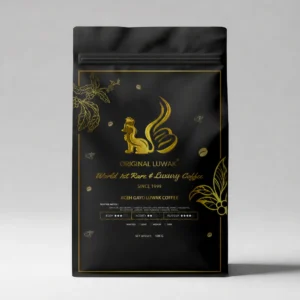
Want to taste what a wild civet’s selection does to the cup? The Original Luwak 100 g pouch is $79, cupped at 84+, and ships worldwide.
What the Civet Actually Does to the Bean
The civet does not digest the coffee bean. It digests the fruit around it. The cherry’s skin and pulp are broken down in the animal’s gut, and the seed, protected by its parchment layer, passes through intact within a day or so.
What happens during that passage is the second contribution. Digestive enzymes and gut microbes act on the outside of the seed while it is inside the animal, a short, warm, natural fermentation. A 2004 study by Massimo Marcone at the University of Guelph, the most cited research on civet coffee, reported changes to the beans’ proteins compared with untouched beans from the same region. That is the leading explanation for why kopi luwak cups with less bitterness. It is chemistry, not a health benefit, and we treat it as such. Our article on why kopi luwak is less bitter goes through the evidence and its limits.
The rest is human work: collection from the forest floor, thorough washing, drying, hulling, sorting, and roasting. Ours are semi-washed and manually dry-hulled, which is not how most Sumatran coffee is milled and is the reason the cup runs clean rather than heavy. The civet’s part is over in a day. The full luwak coffee process from forest to roaster is covered step by step.
Wild vs Caged: The Question Every Buyer Should Ask
Kopi luwak is produced in two ways, and they share nothing but the name.
In caged production, civets are trapped or bred, kept in small cages, and fed coffee cherries as most or all of their diet to force volume. A 2016 study in the journal Animal Welfare assessed civets at plantations in Bali against basic welfare criteria and found serious failures on cage size, diet, hygiene, and the animals’ ability to behave normally. A 2013 BBC investigation documented the same practice in the supply chain reaching European shelves. This is why animal welfare organisations campaign against civet coffee as a category, and the criticism is fair. A caged civet on a coffee-only diet is a stressed animal, and its digestion is not the working system that gives wild kopi luwak its character.
In wild production, free-roaming civets in the forest eat what they choose, coffee cherries included, and collectors gather the droppings from the forest floor. No animal is confined, and the yield is capped by the season.
Original Luwak sources only the second model. We attach every welfare claim to something you can check:
- MPKG certification from the Gayo Coffee Protection Community, which the brand states covers responsible sourcing and animal welfare protection for our lots. It is documented on our certifications page.
- Traceability to the named harvest areas in Aceh Tengah listed earlier on this page, rather than to “Indonesia”.
- The collection model itself: forest collection from free-roaming animals, with a harvest that rises and falls with the fruit.
- The diet argument: a civet eating fruit, insects, and cherries has a working digestive system, and a civet eating only coffee does not. That is a plausibility argument about the cup, not proof of welfare on its own, which is why it sits last on this list.
| Wild, free-roaming | Caged | |
|---|---|---|
| The animal’s diet | Natural: fruit, insects, some coffee | Coffee cherries, forced |
| Where beans are collected | Forest floor, by hand | Cage floor |
| Yield | Seasonal, limited | Continuous, on demand |
| Typical 2026 retail price | $600 to $1,300 per kg | From about $100 per kg |
| How to verify | Certification, named origin, batch grading | Usually nothing offered |
How to Tell Which Civet Your Coffee Came From
You cannot see the animal. You can check the paper trail.
- Price floor. Below roughly $600 per kilogram as of 2026, wild sourcing stops being plausible. A kopi luwak bag at $30 is caged, blended, or not kopi luwak. For the full breakdown by format, see our kopi luwak price guide.
- Named origin. Wild coffee comes from somewhere specific. “Indonesia” is not an origin. “Aceh Tengah, Sukarame” is.
- Batch grading. Ask for the cupping score and who scored it. Wild lots from Aceh Tengah cup at 84+ when verified by a CQI-certified Q Grader.
- A welfare mechanism, not a slogan. “Ethically sourced” on a label means nothing on its own. A certification name, such as MPKG, means something.
- Where you are buying. Duty-free shops and tourist markets are where caged and counterfeit kopi luwak concentrate. Sellers at origin, who can name the harvest area, are where wild coffee comes from.
Our buyer’s guide to spotting real kopi luwak goes deeper on each check.
Frequently Asked Questions
What animal makes kopi luwak?
The Asian palm civet (Paradoxurus hermaphroditus), called the luwak in Indonesia. It is a small, nocturnal mammal in the viverrid family that eats ripe coffee cherries and passes the beans intact. In wild production the civet roams free. In caged production it is confined and fed coffee only.
Is the luwak a cat?
No. The luwak is a civet, part of the family Viverridae, which is closer to mongooses than to cats. The nickname civet cat comes from its cat-like shape and long tail. True cats, from house cats to tigers, belong to Felidae, a separate family.
Is kopi luwak cruel to the civet?
Caged kopi luwak is. Civets are confined and fed a coffee-only diet to force volume, which welfare research and journalism have both documented. Wild kopi luwak is collected from free-roaming animals and involves no confinement. Original Luwak sources only wild coffee, certified under MPKG and traceable to harvest areas in Aceh Tengah.
What is the difference between a civet and a mongoose?
Both are small carnivorans, but civets (Viverridae) are nocturnal, fruit-eating climbers with long tails, while mongooses (Herpestidae) are mostly daytime ground hunters. Only the Asian palm civet produces kopi luwak. Vietnamese weasel coffee is the same civet under a different name, not a different animal.
Where does the luwak animal live?
Across South and Southeast Asia, from India and Sri Lanka through Thailand, Malaysia, Indonesia, and the Philippines, in forests, plantations, and even towns. In Aceh Tengah it feeds in the shade-grown coffee gardens at 1,200 to 1,700 metres, which is where Original Luwak’s collectors work.
Try Wild Kopi Luwak from Original Luwak
Original Luwak sells wild kopi luwak coffee from the forests around Aceh Tengah, collected from free-roaming civets, MPKG certified, and cupped at 84+ by a CQI-certified Q Grader before it is packed. We roast to order in light, medium, or dark, whole bean or ground to your brewer.
The 100 g pouch is $79 and runs to roughly seven cups. The 100 g gift tin is $99 and arrives with an engraved box and a tasting card. Both ship worldwide from Aceh.