

Indonesian coffee is mostly Robusta, with a smaller and far better-known stream of highland Arabica from Sumatra, Java, Bali, Sulawesi, Flores and Papua. That split matters when you buy, because “Indonesia” on a bag tells you almost nothing about what is inside it. This guide gives you the regions, the numbers, the processing methods and a way to read a label, then shows where kopi luwak fits. We write from Aceh Tengah, in the Gayo highlands of Sumatra, where Original Luwak has worked since 2008.
Last updated: 6 November 2026
Indonesian Coffee in Numbers
Indonesia is one of the five largest coffee producers in the world. USDA’s July 2026 Coffee: World Markets and Trade report estimates Indonesian coffee production at 12.4 million 60-kilogram bags for 2025/26, fourth behind Brazil, Vietnam and Colombia. For 2026/27 it forecasts 11.4 million bags, which would put Indonesia fifth, with Ethiopia moving ahead.
The drop is weather, not demand. USDA reports that excessive rainfall disrupted flowering and cherry formation in the lowland areas of southern Sumatra and Java, where most of the country’s Robusta grows. Arabica is expected to hold steady on normal growing conditions.
The table shows USDA’s figures for Indonesia, in thousands of 60 kg bags. The Indonesian coffee year starts in April.
| USDA figure | 2025/26 estimate | 2026/27 forecast |
|---|---|---|
| Total production | 12,370 | 11,380 |
| Robusta | 11,000 | 10,000 |
| Arabica | 1,370 | 1,380 |
| Green bean exports | 7,844 | 7,000 |
Arabica and Robusta: What Indonesia Actually Grows
Robusta is the bulk of the crop. In the USDA forecast for 2026/27, Robusta accounts for 10.0 million of the 11.4 million bags, close to 88 percent. Arabica is about 1.4 million bags, roughly one bag in eight.
Robusta grows low and warm. USDA puts roughly three-quarters of it in the lowlands of southern Sumatra and Java, and Indonesia’s Ministry of Tourism guide to the country’s coffees names Lampung, at the southern end of Sumatra, as one of its largest Robusta centres.
Arabica is what most specialty buyers mean when they talk about Indonesian coffee. The origins you hear named are highland ones, and they are a small share of the national total. If a bag does not say which species it holds, do not assume. Ask.
Every 100 g pouch we sell is single-origin Arabica from Aceh Tengah, grown at 1,200 to 1,700 metres, cupped at 84+ by a licensed Q Grader and roasted to order.
The Main Coffee Regions, Island by Island
Each island has its own soils, altitudes and habits. The cup descriptions below come from the same Ministry of Tourism guide: read them as the official summary of each origin, not our tasting notes.
Sumatra: Aceh, North Sumatra and Lampung
Sumatra grows both species: Robusta in the southern lowlands around Lampung, Arabica in the northern highlands. In Aceh, the Gayo highlands of Aceh Tengah and Bener Meriah grow the Arabica we work with, and our guide to Gayo coffee from the Aceh highlands covers that area in detail. North Sumatra is home to Mandheling, from Tapanuli, and Sidikalang, from Dairi. Our page on Mandheling Sumatra coffee explains what that trade name really covers. For the island as a whole, read our guide to what is Sumatra coffee.
Java: West Java and East Java
Java grew one of the first Indonesian coffees known abroad. The ministry guide traces Java Preanger, from the Priangan highlands of West Java, to the Dutch colonial period, and names Ijen Raung and Blawan in East Java. Java’s lowlands also sit inside the Robusta belt USDA describes.
Bali: Kintamani
Kintamani coffee grows on the highlands of Bangli regency. The guide describes Subak Abian, a traditional system that plants coffee alongside fruit trees such as oranges, and links it to the citrus character you can expect from a Bali cup.
Sulawesi: Tana Toraja
Toraja coffee comes from the highlands of Tana Toraja in South Sulawesi, on fertile volcanic soil. The guide describes a full body, an earthy character and notes of dark chocolate and spice.
Flores: Bajawa
On Flores, in East Nusa Tenggara, Arabica is grown mainly around Bajawa, again on volcanic soil. The guide lists floral aroma, chocolate and a light spice.
Papua: the Baliem Valley
Wamena coffee comes from the Baliem Valley in Highland Papua. According to the guide, most gardens there are still farmed traditionally with very little chemical input, and the cup runs light, floral and sweet.
Wet Hulled, Washed or Semi-Washed
Processing shapes the cup as much as the island does. You will meet three terms on bags, and one of them is slippery.
- Wet hulled (giling basah). Coffee Review’s 2016 report on Sumatran processing calls wet hulling Indonesia’s most popular method: the parchment is stripped in the middle of drying, while the bean can still hold as much as 40 percent moisture. That is where the heavy, earthy weight of so much Sumatran coffee comes from. Our guide to wet hulled coffee walks through the steps.
- Washed. In conventional washed processing, the bean dries inside its parchment to roughly 12.5 percent moisture before it is hulled. The cup keeps more of its fruit and acidity.
- Semi-washed. The same Coffee Review report found some Sumatran bags using semi-washed for coffee that was in fact wet hulled, a term it says belongs to other methods. When a label says semi-washed, you need one more answer: was it hulled wet or dry?
Original Luwak answers that question up front. Our coffee is semi-washed and manually dry-hulled: the parchment stays on until the bean has dried to a stable moisture, and only then is it removed by hand. The green coffee finishes under 13 percent moisture. That is why the cup you get reads clean rather than heavy.
How to Read an Indonesian Coffee Label
A good bag of Indonesian coffee answers six questions. A vague one answers only the first, and only partly.
- Where exactly? “Indonesia” covers a whole archipelago. Aceh Tengah, Tana Toraja or Kintamani tells you far more.
- Which species? Close to nine bags in ten of the national crop are Robusta, so an unnamed species is worth asking about.
- Which process? Wet hulled, washed or semi-washed, and if semi-washed, hulled wet or dry.
- How high? Highland Arabica usually states its altitude in metres. Ours grows at 1,200 to 1,700.
- Who scored it? A cupping score means something only if a licensed grader gave it. Ours is 84+ on every batch.
- When was it roasted? Roasted to order beats a best-before date every time.
If a bag answers only the first question, you are buying a reputation, not a source.
Where the Asian Palm Civet Comes In
The Ministry of Tourism guide lists kopi luwak among the most famous Indonesian coffees. It is not a region or a variety. It is coffee whose ripe cherries were eaten by an Asian palm civet (Paradoxurus hermaphroditus), called luwak in Indonesia, with the seeds collected after they pass. Our page on what is civet coffee covers the basics.
Kopi luwak is produced in two very different ways. In caged production, civets are confined and fed a coffee-cherry-only diet to force volume. In wild production, wild, free-roaming civets select ripe cherries from their natural range, and the yield is whatever the season gives. The welfare evidence is set out in our answer to is kopi luwak cruel. Read it before you buy from anyone, us included.
Original Luwak sources only the wild kind, from forest edges and shade-grown gardens around Aceh Tengah. The beans trace to six named harvest areas: Takengon, Bener Meriah, Angkup, Sukarame, Bies and Pondok Baru. Our sourcing is verified through MPKG certification from the Gayo Coffee Protection Community.
Stand in those gardens and you notice the coffee is rarely planted alone. Shade trees, fruit trees and forest edge run through the plots, and that mixed cover is why civets live there at all.
Frequently Asked Questions
Is Indonesian coffee Arabica or Robusta?
Mostly Robusta. USDA forecasts Indonesian production of 11.4 million 60-kilogram bags for 2026/27, of which 10.0 million are Robusta and about 1.4 million are Arabica. Robusta grows mainly in the lowlands of southern Sumatra and Java. The Arabica sold by name comes from highland regions such as Aceh, Flores and Papua.
Where does Indonesia rank among coffee producers?
Indonesia is one of the five largest. USDA’s July 2026 report estimates 12.4 million bags for 2025/26, fourth behind Brazil, Vietnam and Colombia. Its 2026/27 forecast of 11.4 million bags would place Indonesia fifth, behind Ethiopia as well, after heavy rain disrupted flowering in the Robusta lowlands of southern Sumatra and Java.
Why does so much Indonesian coffee taste earthy?
Mostly because of wet hulling, or giling basah, the most common processing method in Indonesia. The parchment is stripped mid-drying, while the bean can still hold as much as 40 percent moisture. That gives the heavy body and earthy, low-acid cup many buyers associate with Sumatra. Dry-hulled coffee from the same highlands tastes noticeably cleaner.
Is kopi luwak an Indonesian coffee?
Yes. Kopi luwak takes its name from luwak, the Indonesian word for the Asian palm civet, and Indonesia’s Ministry of Tourism lists it among the country’s best-known coffees. It can come from wild civets or caged ones. Original Luwak sources only from wild, free-roaming civets in Aceh Tengah, verified through MPKG certification.
Taste Highland Arabica from Aceh Tengah
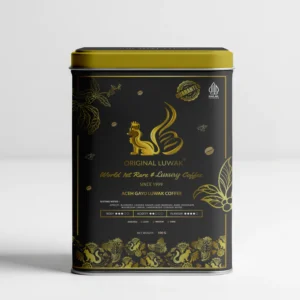
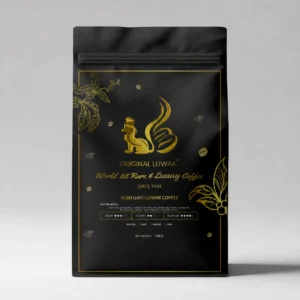
Original Luwak sells kopi luwak coffee from wild, free-roaming civets in six named harvest areas of Aceh Tengah, verified through MPKG certification, cupped at 84+ by a licensed Q Grader and roasted to order, light, medium or dark, whole bean or ground. We ship worldwide from Aceh.
The 100g pouch is $79 and gives you roughly seven cups. The 100g gift tin is $99. Our kopi luwak price guide puts those figures in context. When you are ready, buy kopi luwak direct from the people who collect it.