

What is Sumatra coffee? It is coffee grown on Sumatra, the large western island of Indonesia, and in the specialty trade it usually means highland Arabica from the north of the island, processed by a local method called wet hulling. That method, more than any single region, is why so many Sumatran coffees taste heavy, earthy and low in acidity. This guide covers where the coffee grows, how the processing works, what it does to the cup, and how to read a Sumatra label so you know what you are buying. We write from inside the growing area, in Aceh Tengah, where we collect our own coffee and process it differently.
Last updated: 26 October 2026
What Is Sumatra Coffee, in One Paragraph
Sumatra coffee is a geographic label, not a variety or a grade. The name covers coffee from several provinces, grown by smallholders on small plots, moved through long trading chains and exported mostly through the port of Medan. What ties it together is a shared style: in the words of a report for an FAO project on coffee quality, the coffees shipped from northern Sumatra are known for “a spicy flavour, complex, earthy body and low acidity”.
That style comes largely from how the beans are processed, which is why two bags labelled Sumatra can taste completely different when one producer does things another way. Sumatra is also only one part of a much larger producer, and our guide to Indonesian coffee shows where it sits alongside Java, Bali, Sulawesi, Flores and Papua.
Where Sumatra Coffee Grows
Coffee is grown in several parts of the island, but the Arabica most specialty buyers know comes from the mountains of the north. Two provinces matter most.
North Sumatra: the famous trade names
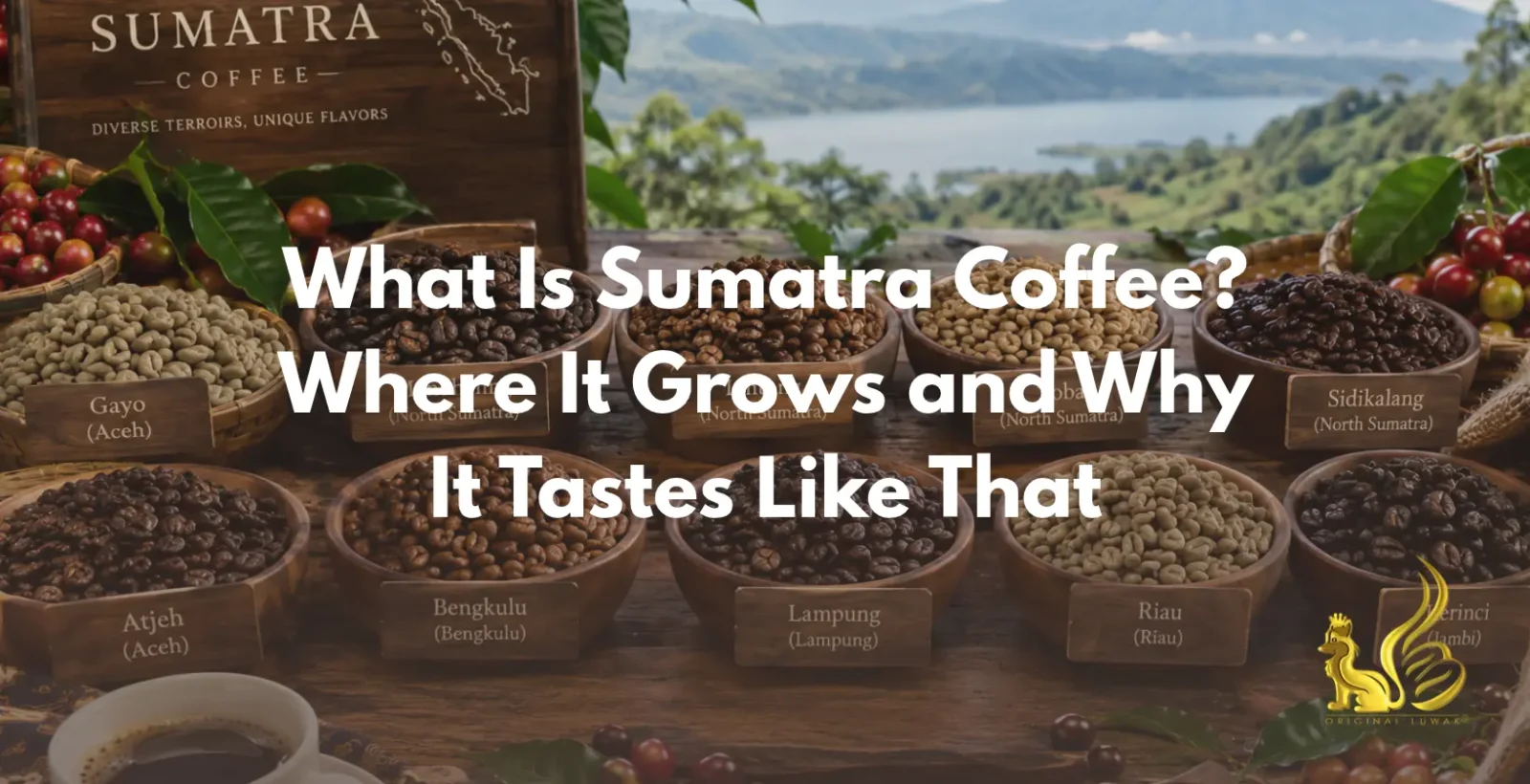
North Sumatra, around the highlands of Lake Toba, is the home of the best-known Sumatran trade names. A report for an FAO project on preventing mould in coffee describes Mandheling as “the generic name for the range of coffees from Northern Sumatra, exported out of the port of Medan”. It is a trade name, not a farm. The same report lists the export grades sold out of Medan, from Mandheling Grade 1 to 3 and Triple Picked Mandheling to the Lintung grades. Lintong and Sidikalang are also sold as coffees in their own right.
The report also gives a sense of scale. Exports of these coffees grew from 12,000 tons in 1992 to an estimated 30,000 tons through Medan in the 2004/2005 season, according to the Indonesian Coffee Exporters Association, mostly from smallholder farms. Our guide to Mandheling Sumatra coffee covers where that name comes from and where it grows today.
Aceh: the northern highlands
North of the provincial border, Aceh grows highland Arabica of its own, and some of it has travelled to market through Medan alongside North Sumatra’s coffee. The FAO report describes trading chains running “from the mountains of North Sumatra and Aceh to the Port of Medan”. That shared port is why buyers so often blur the two provinces together.
Aceh’s central highlands are where we work. The region’s coffee carries its own geographical indication, and our guide to Gayo coffee from the Aceh highlands sets out the protected area, the altitude and what makes that cup different. We keep this guide to the island as a whole.
Wet Hulling: The Process Behind the Sumatra Taste
Most of the world’s washed coffee is dried inside its parchment, the thin husk around the bean, and hulled only once it is dry. Sumatra commonly does it the other way round. The Indonesian name is giling basah, which translates as wet grinding, and in English it is called wet hulling.
The steps, as the FAO report describes them:
- The cherry is pulped, fermented and washed, as in ordinary wet processing.
- The parchment coffee is dried only briefly and sold on, still wet, through traders.
- The parchment is hulled while the bean is still wet, at roughly 35 to 50 percent moisture.
- The naked green bean finishes drying afterwards, down to about 12 percent.
Wet hulling is fast, which suits a humid island and a long chain of small traders. It also leaves its mark. The FAO trial concluded that rapid wet hulling after fermentation and washing “gives the best chance of producing Mandheling character”, so the method is part of what buyers are paying for. The same report warns that the process makes the coffee susceptible to mould infection, which is why quality varies so much from bag to bag. Our full guide to wet hulled coffee sets out the moisture figures, the defects to watch for and how to spot the process on a label.
Processing at origin is only one stage of the journey. If you want to see how civet coffee in particular moves from cherry to roasted bean, our page on the luwak coffee process walks through it step by step. For where the practice began, see our guide to kopi luwak origin.
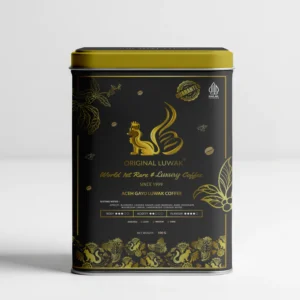
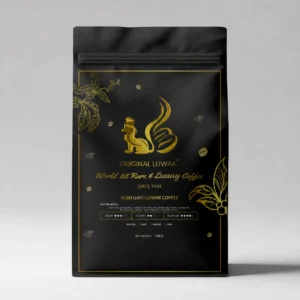
Want to taste Sumatra without the wet-hulled weight? Our 100 g pouch is semi-washed and dry-hulled by hand in Aceh Tengah, cupped at 84+ and roasted to order.
What Sumatra Coffee Tastes Like
A classic wet-hulled Sumatran cup has three traits:
- Body: heavy and syrupy, often the first thing people notice.
- Flavour: earthy, spicy, sometimes woody or herbal.
- Acidity: low, so the cup reads smooth rather than bright.
That profile has loyal fans. It also has critics, who find the earthiness muddy and the low acidity flat. Both are describing the same thing: the fingerprint of wet hulling. A bag that tastes musty rather than earthy is usually a processing or storage fault, not the style itself, and the FAO report links musty flavours to coffee held too long as wet parchment.
Change the process and the cup changes with it. A Sumatran coffee that is dried in its parchment before hulling keeps more of its fruit and acidity and loses some of the heavy, earthy weight. Sumatran origin does not lock a coffee into one taste. The processing decides most of it.
How Original Luwak Processes Its Sumatran Coffee
We are a Sumatran producer, and we chose not to wet-hull. Our coffee is Arabica from Aceh Tengah, grown at 1,200 to 1,700 metres, and it is semi-washed and manually dry-hulled: the parchment stays on until the bean has dried to a stable moisture, and only then is it removed by hand. The finished green coffee sits under 13 percent moisture, with defects of 3 to 6 percent and screen sizes from 15 to 19.
The cup that comes out of that process opens nutty, with vanilla, chocolate and almond, then turns herbal and gently spicy, with soft to medium acidity and a mild body. It is still recognisably Sumatran in its spice and herbal notes, but cleaner than the wet-hulled profile most people expect.
There is one more step that makes our coffee unusual. It is kopi luwak, from Indonesia’s own highlands. Our kopi luwak coffee starts with wild, free-roaming Asian palm civets that choose the ripest cherries in the coffee gardens and pass the seeds, which we collect from the forest floor. Nobody cages or feeds the civets. Caged production, where civets are penned and fed cherries, is a different and cheaper product, and it is the welfare problem behind most criticism of kopi luwak. Our certifications page shows what stands behind our claims, from MPKG and Halal certification to cupping by a CQI-certified Q Grader against the Specialty Coffee Association’s coffee standards.
How to Read a Sumatra Coffee Label
“Sumatra” on a bag tells you the island. Four questions tell you the rest:
- Which province? North Sumatra points you to the classic trade names around Lake Toba. Aceh points you to the northern highlands.
- Which process? Wet-hulled, or giling basah, means the heavy, earthy style. Washed, semi-washed or dry-hulled means a cleaner cup.
- What altitude? Higher gardens generally mean slower ripening and denser beans. A producer who knows the altitude will print it.
- Who made it? A producer or exporter you can name beats a generic grade. Many Indonesian exporters belong to AEKI-AICE, the Indonesian Coffee Exporters and Industry Association, and membership is one place to start checking a seller.
If a bag answers none of those, it is a commodity blend sold on the island’s reputation. That can still be a pleasant cup, but you are buying a style, not a source.
Frequently Asked Questions
What is Sumatra coffee?
Sumatra coffee is coffee grown on the Indonesian island of Sumatra, usually highland Arabica from the north. Most of it is wet hulled, a local method that strips the parchment while the bean is still wet. That process gives the classic Sumatran cup: heavy body, earthy and spicy flavour, and low acidity.
Why does Sumatra coffee taste earthy?
Mostly because of wet hulling, or giling basah. The parchment is removed while the bean holds around 35 to 50 percent moisture, and the naked bean then dries on its own. A report for an FAO coffee project ties this fast wet hulling to the classic Mandheling character of spice, earthy body and low acidity.
Is Sumatra coffee Arabica or Robusta?
The Sumatran coffee sold in the specialty trade, including the Mandheling grades exported through Medan, is Arabica grown in the northern highlands. If a bag does not say Arabica, ask before you buy. A bag that names the province, the process and the altitude is far more informative than one that just says Sumatra.
Is Sumatra coffee good?
It depends on what you like and how it was processed. Wet-hulled Sumatran coffee suits drinkers who want a heavy, low-acid, earthy cup. Dry-hulled or semi-washed Sumatran coffee tastes cleaner and brighter. Quality varies widely because wet hulling makes coffee prone to mould, so a named producer matters.
Taste the Dry-Hulled Side of Sumatra
Original Luwak collects wild kopi luwak in Aceh Tengah, semi-washes and dry-hulls it by hand, and roasts it to order, light, medium or dark, whole bean or ground. We ship worldwide.
The 100g pouch is $79 and gives you roughly seven cups. The 100g gift tin is $99. Our kopi luwak price guide puts those figures in context. When you are ready, buy kopi luwak direct from the people who collect it.